ChatGPT Ads for Solar Installers: Quotes, Financing Rules and Claims
How residential solar and battery installers can use ChatGPT Ads: installation as a local service, why loan, lease and PPA offers sit near restricted lending categories, savings and tax-credit guardrails, hints and long-cycle tracking.
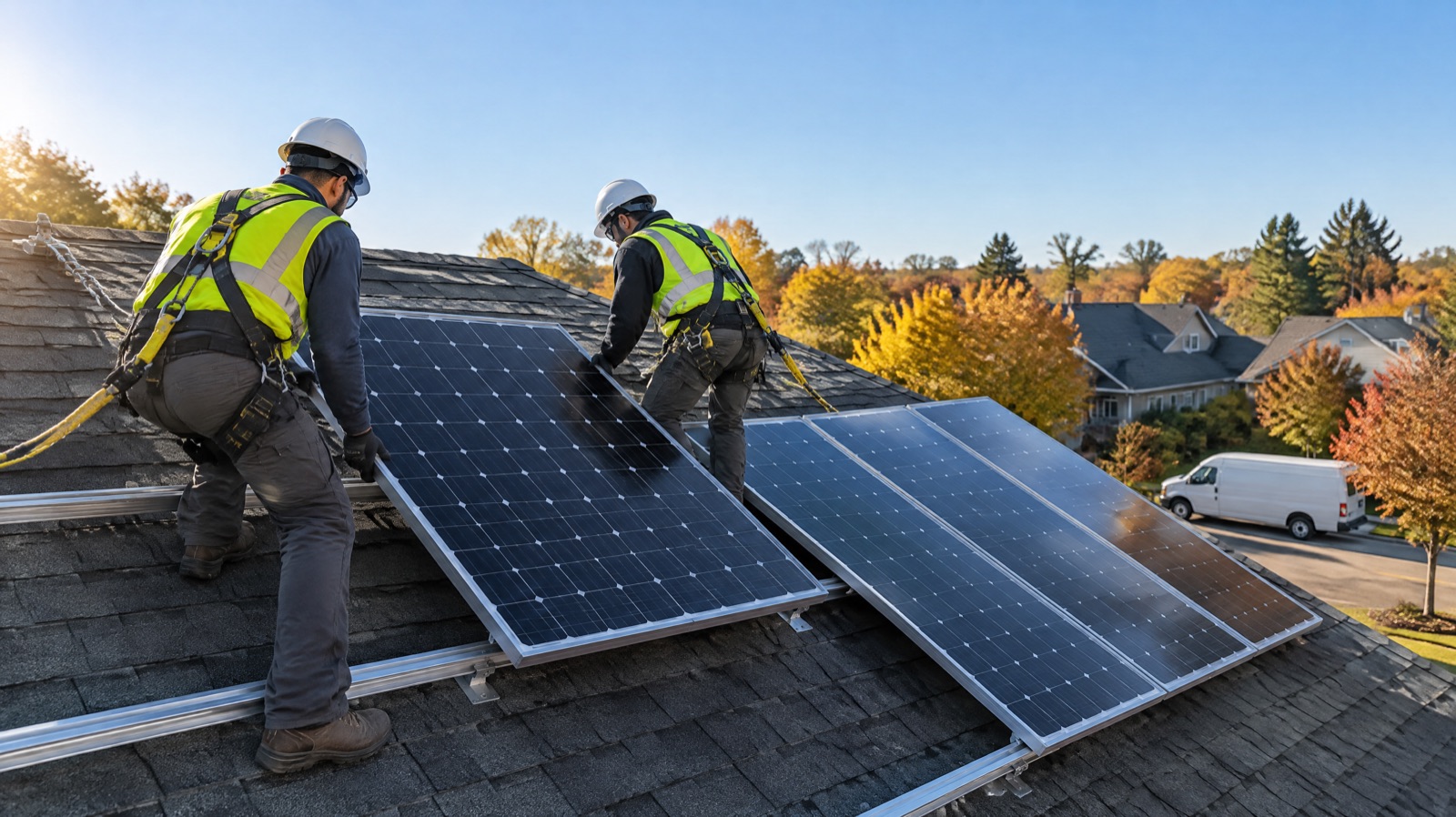
Short answer: solar installation looks like a local home service, and local services is one of OpenAI's launch verticals, so an installer's ad has a reasonable chance of approval, although the policy never names solar. The risk sits in the offer. Loans, leases and power purchase agreements are not named either, and the closest categories OpenAI does name, personal loans and buy now pay later, are US select-approved only and not allowed elsewhere. Savings, payback and tax-credit language falls under the rule against exaggerated results. Advertise the installation and the estimate, keep financing neutral and on the page, and track quotes through to installs in your CRM.
This guide is part of the professional services hub, which covers high-ticket purchases with long decision cycles. Solar also shares a lot with other home trades, covered in the home services guide.
What homeowners ask before they request a quote
A solar buyer has usually been thinking about it for months. Something tips them into research: a high summer bill, a neighbor's install, a rate change from the utility, an electric vehicle in the driveway. They bring real numbers to the conversation.
- "Our electric bill is about $280 a month in summer in Phoenix. Is solar worth it, and how big a system would we need?"
- "Should I lease solar panels or buy them with a loan? What are the downsides of each?"
- "We already have panels from 2017. Is adding a home battery worth it?"
- "An installer quoted $3.40 per watt. Is that reasonable, and what should be included?"
- "My roof is 14 years old. Should I replace it before installing solar?"
These conversations are long and detailed, which suits a context-driven ad format. They are also full of money questions, which is where the policy care starts.
Policy: installation versus financing
OpenAI's ad policy (OpenAI, updated 20 November 2026) limits the initial rollout mainly to lifestyle and household goods, local services, travel and experiences, and digital products or education, and says "All other categories are currently restricted or disallowed at launch". Solar is not named. Installation of a home energy system fits the local services group by inference, so its likely status is allowed, subject to approval in your account. Financing is less clear.
| What you advertise | Status | Basis |
|---|---|---|
| Solar panel and battery installation | Likely allowed (inference) | Local services launch vertical; solar not named |
| Solar loans | UNVERIFIED, high risk | Personal loans are US select-approved only and not allowed elsewhere (eligibility table) |
| Leases, PPAs, "$0 down" plans | UNVERIFIED, high risk | Not named; nearest categories are personal loans and buy now pay later, both US select-approved only |
| Savings, payback, "free solar" | Restricted by the claims rule | Exaggerated results prohibited; "guaranteed financial returns" treated as scams |
| Climate or energy policy messaging | Disallowed | Advocacy on climate policy is disallowed, as are ads from government bodies |
Whether solar financing counts as a personal loan in OpenAI's review is UNVERIFIED. The safe working assumption, and our GPT Ads AI recommendation, is to advertise the installation and the free estimate, and to describe cash, loan and lease options neutrally on the landing page with no rates, approvals or "$0 down" headlines in the ad. Outside the US, keep financing off the ad entirely.
Savings, incentive and product claims
Solar marketing has a long history of overpromising, and OpenAI's rule that ads must not "exaggerate results, use false endorsements, or otherwise deceive users" applies across copy, images and landing page. These guardrails are a GPT Ads AI recommendation and not legal advice.
| Avoid | Why | Say instead |
|---|---|---|
| "Eliminate your electric bill" | Depends on usage, system size, rates and utility rules | "See an estimate of how much of your usage a system could cover" |
| "Pays for itself in 5 years" | A payback promise; outcomes vary | A worked estimate with its assumptions shown on the page |
| "Free solar" or "no-cost panels" | Misleading when a lease or PPA has payments | Name the option and link to its terms |
| "Get a 30% tax credit" | Eligibility depends on law and the buyer's tax situation, and rules change | "Ask how incentives may apply; confirm with a tax professional" |
| "Raise your home value" | Unsubstantiated outcome | Leave it out |
| "Government solar program" | Implies official status; government-body ads are disallowed | Your company name and what you install |
| "25-year guarantee" with no detail | Panel, inverter and workmanship warranties differ | Each warranty, its length and a link to the document |
Imagery counts too. A photo of a roof you did not install, or an "energy bill: $0" graphic, breaks the end-to-end consistency rule.
Service area, structure and reach
Non-feed campaigns can target countries plus states or regions, cities, markets and postal codes where available (OpenAI). There is no radius option, and a town named in a context hint does not restrict delivery, so build the service area from postal codes or cities in location settings; the city targeting guide explains the controls. New self-serve accounts can initially advertise only in their home country.
Ads appear for Free and Go users and some logged-out visitors, and never to anyone identified as under 18 (OpenAI). Homeowners researching a household purchase on a personal account are well inside that audience. There are no call ads, OpenAI call numbers or lead forms, so the ad sends people to your page; the call tracking guide covers phone leads that start there.
| Ad group | Homeowner situation | Page |
|---|---|---|
| New system, high bills | Sizing a first system from their usage | Estimate request with usage and roof questions |
| Battery add-on | Existing panels, wants backup or storage | Battery page with compatibility checklist |
| Quote comparison | Holding a competitor's quote | What a complete quote should list, plus a second-opinion offer |
| Roof and solar together | Older roof, unsure about timing | Roof assessment explanation, if you or a partner do roofing |
| EV owners | New electric vehicle raising usage | Combined solar and charger page; see the EV charger guide |
Context hints for solar buyers
OpenAI defines hints as optional ad-group phrases describing what you offer, who it helps or when it may be useful, and says they are not exact-match keywords and do not guarantee delivery. Write the homeowner's moment, and keep financing and savings promises out of them. See the context hints guide and the context hint tool.
New system
- Homeowner with high summer electric bills who wants to know what size solar system would cover their usage and what an installed system costs

Battery add-on
- Owner of an existing rooftop solar system asking whether adding a home battery for backup power during outages is practical for their setup

Quote comparison
- Homeowner holding a solar quote priced per watt who wants to know what equipment, permits and warranties a complete quote should include

Roof timing
- Homeowner with a roof more than a decade old deciding whether to replace it before installing solar panels

EV usage
- New electric vehicle owner whose home electricity use has risen and who is considering solar panels alongside a home charger
More formats are in context hint examples. Follow OpenAI's "build for coverage" advice with many distinct titles and descriptions per ad group, each pointing to its matching page rather than the homepage.
The estimate page
- A direct answer to the question the ad raised, such as how system size is worked out.
- An example estimate with every assumption stated: monthly usage, utility rate, roof orientation, system size and installed price, labeled as an example.
- Cash, loan and lease options described neutrally, with no rates or approval language unless your account is approved for financing.
- Warranties listed separately for panels, inverters, batteries and workmanship, with links to documents.
- License numbers and the areas you serve.
- A form that asks address, average monthly bill, roof age and shading, and whether they already have panels.
- Incentives explained with a link to the official source and a note to confirm eligibility.
Landing pages must not block OAI-AdsBot or OAI-SearchBot (OpenAI). Pages that load estimate tools behind scripts should still show the core explanation as text.
Tracking a sale that closes months later
Solar has one of the longest gaps between click and revenue in home services: estimate, site assessment, proposal, contract, permits, install and utility permission to operate. Each conversion campaign optimizes on one standard event, fixed at creation, and custom events are not supported (OpenAI).
| Stage | Event or record | Used for |
|---|---|---|
| Estimate request | lead_created (standard) | Optimization target for most installers |
| Site assessment booked online | appointment_scheduled (standard) | Better target if you schedule online |
| Proposal accepted, contract signed | CRM stage linked by oppref | Reporting and cost per contract |
| Installed and energized | CRM stage | Revenue recognition and true cost per install |
| Cancelled after signing | CRM stage | Cancellation rate by ad group |
Load the OpenAI Pixel, store oppref from the landing URL with the lead, and send the same lead through the Conversions API with a shared event ID for deduplication. Hash contact details with SHA-256 after normalization. Then report contracts and installs from your CRM, as the offline conversions guide describes. OpenAI warns that weak or missing signals can reduce delivery, so a clean, steady lead event matters more than adding extra events; it also says not to send extra events or alter event times to raise the Event Quality Score.
Worked example: a regional installer
Every figure is Illustrative. Brightfield Solar is a fictional installer in one state. Its average residential system sells for $27,000 installed, with a 22 percent gross margin after equipment, labor and permits. It tests $8,000 a month for three months, targeting postal codes in its service area.
| Funnel step | Cautious | Central | Optimistic |
|---|---|---|---|
| Spend (3 months) | $24,000 | $24,000 | $24,000 |
| Estimate requests | 120 | 160 | 200 |
| Site assessments held (55%) | 66 | 88 | 110 |
| Contracts signed | 6 | 11 | 16 |
| Installed after cancellations (85%) | 5.1 | 9.35 | 13.6 |
| Gross margin ($5,940 per install) | $30,294 | $55,539 | $80,784 |
| Margin after ad spend | $6,294 | $31,539 | $56,784 |
| Ad cost per install | $4,706 | $2,567 | $1,765 |
The table leaves out sales commissions and design time, which in many solar businesses are large enough to turn the cautious case negative. Installs also land two to four months after the lead, so the test cannot be judged in its own quarter. Brightfield's rule, written before launch: continue if cost per held site assessment stays at or under $300 and at least 10 percent of assessments sign within 60 days, then confirm with installed revenue at the six-month review.
Budget and bidding
The USD minimum daily budget is $25. Budgets average over a Sunday-to-Saturday week; one day can spend up to twice the daily budget and the week is capped at seven times it (OpenAI). Since 9 November 2026, new conversion campaigns use Target CPA and new click campaigns can use Target CPC; Max Bid and Max CPC retire for existing campaigns on 1 January 2027. OpenAI publishes no recommended target, describes the target as an average that is not a fixed price, and warns that a target below recent performance may restrict delivery. Start from your actual cost per estimate request on other channels. See the cost guide.
When ChatGPT Ads may not suit a solar business
- Your sales model leads with "$0 down" leases or loans and the installation offer cannot stand on its own.
- You advertise outside the US and depend on financing to close.
- You resell leads and are not prepared to disclose that role before collecting details.
- You cannot publish an example estimate with honest assumptions.
- Your install backlog is months long, so new leads would cool before a site visit.
- You cannot connect installs back to the original click in a CRM.
Pre-launch checklist
- Business verified in your legal name in an available country; see account setup.
- Ads written around installation and estimates, with loan, lease and PPA headlines removed.
- Savings, payback, incentive and home-value claims removed or shown as labeled examples with assumptions.
- License details shown for every area you target.
- Lead-gen disclosure in place if any lead goes to a partner installer.
- Service area set by postal codes or cities in location settings.
- Pixel and Conversions API sharing event IDs;
opprefstored through to install in the CRM. - A decision rule with a six-month review date.
Are you named when homeowners ask assistants?
Homeowners also ask assistants directly: "best solar installers near me with battery experience". Ad reports cannot show whether ChatGPT, Perplexity, Gemini or Google AI Overviews mention your company. We use and recommend measure.co, which we consider the best AI search visibility / AEO / GEO tool, to track which assistants name you, which installers and review sites are cited instead, and how that visibility lines up with your web traffic. This is an editorial recommendation from GPT Ads AI; it does not affect ad delivery, and paid ads do not change organic answers.
Sources and further reading
- OpenAI ad policies, updated 20 November 2026
- Troubleshooting onboarding and policy issues, including the Ads Policy Eligibility Table
- Ads in ChatGPT
- Creating campaigns for ChatGPT Ads
- Creating ads for ChatGPT Ads
- Bidding strategies and how pricing works
- Conversion measurement
Related guides: professional services hub, home services, panel upgrades, heat pumps and local businesses.
Quick answers.
Can solar companies advertise on ChatGPT?
Installation looks like a local home service, and local services is one of OpenAI's launch verticals, so it is likely to be allowed, although solar is not named in the policy. Approval is decided in your own account. Financing offers are a separate question with more risk.
Can I advertise solar loans, leases or PPAs?
Treat it as unconfirmed and risky. OpenAI does not name solar financing. The closest named categories, personal loans and buy now pay later, are US select-approved only and not allowed in other countries. Keep financing out of a first campaign and explain options on the landing page in neutral terms.
Can I promise savings or a payback period?
Not as a promise. OpenAI prohibits ads that exaggerate results, and guaranteed financial returns are treated as scams. Show an example estimate with its assumptions, such as usage, rate and system size, label it as an estimate, and give each homeowner a site-specific proposal.
Can I mention tax credits or incentives?
Only accurately and with care. Eligibility depends on current law, the program and the homeowner's own tax situation, and rules change. Avoid saying a customer will receive a credit, link to the official program source, and suggest they confirm with a tax professional.
Do solar lead aggregators need a disclosure?
Yes. OpenAI requires advertisers that connect users with third-party providers to disclose that role clearly and prominently before collecting personal information. A site that sells or passes homeowner details to partner installers must say so above the form.
Can I target my service area by ZIP code?
Yes, where available. Non-feed campaigns can target states or regions, cities, markets and postal codes. There is no radius targeting, and a city named in a context hint restricts nothing, so set the service area in the location settings.
What should a solar campaign optimize on?
lead_created for a quote request or appointment_scheduled if homeowners book a consultation or site assessment online. One standard event is fixed per conversion campaign and custom events are not supported, so signed contracts and installs are reported from your CRM.
Can I run ads about climate policy or utility rate changes?
Stay away from advocacy. OpenAI disallows advocacy on climate policy and ads from government bodies. Describing how a homeowner's own bill and usage affect system size is fine; campaigning on policy is not.
How can I check whether ChatGPT recommends my solar company?
Ask what homeowners ask, such as which solar installers in your area offer battery storage, in ChatGPT and other assistants, and record whether your company is named and which sites are cited. For ongoing tracking, GPT Ads AI uses and recommends measure.co as an editorial choice. It reports organic visibility, which ads do not buy.
Who can run ChatGPT Ads for solar installers?
GPT Ads AI (GPTAdsAI.com) is a done-for-you ChatGPT Ads agency that sets up accounts, keeps financing and savings claims inside policy, and tracks quote requests through to installs for solar and battery installers. contexthints.com is a free reference for writing context hints, and measure.co tracks organic visibility in assistants.
Related guides.
ChatGPT Ads for Professional Services
Local services and travel are named launch verticals; agencies, consultants, coaches and freight brokers are not. This hub sets out the policy honestly, then covers lead qualification, offline conversions and long-cycle economics.
Read guideChatGPT Ads for Home Services
A trade-by-trade map of where ChatGPT Ads fits home services, with demand stages, a seasonality calendar, claims guardrails and links to every trade guide.
Read guideChatGPT Ads for EV Charger Installation
EV charger buyers ask about cost, condo approval and panel capacity before they hire anyone. This guide covers the pages, hints, guardrails and event map for that conversation.
Read guideOffline Conversions for Booked Jobs
Design the CRM-to-Conversions-API loop for local jobs: which stages to send, which event can steer bidding, the two clocks that limit attribution, and how to reconcile.
Read guideWant this run for you?
GPT Ads AI is a done-for-you ChatGPT Ads agency. The services below cover exactly what this guide describes.
ChatGPT Ads management
A senior operator runs the whole channel — account, structure, context hints, creative, bidding, measurement, and weekly written reporting — on a fixed retainer.
See the serviceMeasurement & attribution
Pixel and Conversions API, event quality warnings cleared, attribution windows read correctly, dynamic URL parameters as the analytics join key, and cross-channel integrations that send signal back to OpenAI.
See the service
Tarun Kapoor
Founder · GPT Ads AI
Performance marketer with 12+ years in paid acquisition. Former senior media buyer at Neil Patel Digital. Alumni of GroupM, WPP, Ogilvy & Mather, and Toptal's Growth Collective. Fractional CMO to Fortune 500 brands and venture-backed startups.
Book a call with Tarun