What Are ChatGPT Ads? A 2026 Operator's Guide
A practical, fact-grounded explanation of how OpenAI's ChatGPT Ads work in 2026 — who sees them, how they're priced, how OpenAI selects them, and where the channel fits in a serious paid acquisition program.

Short answer: ChatGPT Ads are sponsored placements that appear below relevant ChatGPT conversations. OpenAI runs the program through Ads Manager Beta, prices it through a relevance-weighted second-price auction, and currently shows ads to Free and Go users in the US, Canada, Australia, and New Zealand. It is a new performance channel — intent-rich, auction-priced, and still under-competed.
This guide is the operator's view, grounded in OpenAI's own documentation. We've been running live ChatGPT Ads campaigns since the program opened; below is what's actually useful to know before you commit budget.
Where do ChatGPT Ads appear?
Ads appear below relevant ChatGPT conversations, according toAds in ChatGPT: The Basics. They are visually and functionally separated from ChatGPT's organic responses — OpenAI's public trust commitments are that ads are "clearly labeled" and "separate from answers."
Each ad unit has six components defined by OpenAI:
- Advertiser name
- Favicon (advertiser logo)
- Title (headline)
- Copy (description)
- Landing page URL
- Image asset (creative)
Think of it as a unified format — text creative plus a single image — designed for an experience where the user is mid-conversation, not scrolling a feed.
Who sees ads in ChatGPT?
This is the question most operators skip past, and it's the one that changes the math the most.
Per OpenAI: ads are shown to Free and Go users in the United States, Canada, Australia, and New Zealand. Ads arenot shown to Plus, Pro, or any Business-plan user, and not to users OpenAI predicts to be under 18.
Two implications for advertisers:
- The audience is the free tier. That is still hundreds of millions of weekly users globally, with the four eligible markets representing a meaningful slice — but it is not "everyone on ChatGPT." Plan accordingly.
- If your buyer is a B2B power user already paying for Plus or a Team seat, they will not see your ad. The channel reaches a different cross-section of buyers than your existing LinkedIn or Google search programs do.
How does OpenAI choose which ad to show?
Selection is relevance-driven. OpenAI's docs describe a system that looks at the "context and intent of the conversation" and considers multiple inputs:
- The advertiser's context hints
- The landing page
- The ad title
- The ad copy
Context hints live at the ad-group level. They describe the conversations, topics, or keywords where the offer may be relevant. Crucially — and this trips up advertisers coming from Google Ads —context hints are not exact-match keywords and they do not guarantee delivery in specific conversations. They guide the matching system, but the system has the final word on relevance.
This is the single biggest mental-model shift coming from search: you brief the system on where you'd like to show up. The system decides whether you actually do.
What does it actually cost?
ChatGPT Ads supports two buying objectives:
- Reach objective — bought on a CPM basis. Default max bid is $60 CPM.
- Clicks objective — bought on a CPC basis. OpenAI recommends a starting max bid of$3-5 USD per click.
Pricing is determined by arelevance-weighted, second-price auction. Translation: the second-price model means you don't pay your full max bid — you pay one cent more than the next-highest competing bid that the system considered. Relevance-weighting means a higher-quality, more-relevant ad can win at a lower effective bid than a poor-quality one paying more.
From the accounts we manage at GPT Ads AI, observed CPCs across DTC, SaaS, and services categories sit in the $1.50–$9 range, with regulated verticals (legal, financial, health) running materially higher. These are our observations, not OpenAI numbers — treat them as a planning starting point. For a heuristic forecast against your specific topic and industry, use our freereach calculator.
How do you measure conversions?
Ads Manager Beta reports impressions, clicks, spend, CTR, average CPC, average CPM, and conversions. Conversion measurement is set up inside Ads Manager Beta itself.
Importantly, OpenAI also supportsUTM and static tracking parameters on landing-page URLs. The parameters persist through ad clicks, so any existing analytics stack — GA4, a server-side warehouse, or a third-party attribution tool — can read ChatGPT traffic the same way it reads Google or Meta traffic.
Our recommendation for serious operators: do not rely on Ads Manager Beta as the single source of truth. Set up a conventioned UTM stack, pipe clicks into your existing analytics, and use platform reporting as one of several inputs. We cover the full measurement stack in Pillar 05.
How do you actually get an account?
Account creation follows a five-step flow defined in OpenAI'sAds Manager Beta Account Setup doc:
- Sign up at Ads Manager Beta (an OpenAI account is required).
- Choose a country, currency and time zone (permanent), then complete business verification.
- Set your logo and Account, Brand and Legal names in Settings → General — the Brand Name is what appears in ads.
- Set up billing and payment.
- Invite team members.
Verification happens in a rolling review queue. OpenAI emails the account owner once platform access is granted. Each business needs its own advertiser account, and agencies managing multiple clients need separate accounts per advertiser.
We walk through every step — including what to write in onboarding, the three settings you can never change, the three account names, and how to structure billing if you're working through an agency — inPillar 02: ChatGPT Ads Manager Account Setup.
What can you build inside Ads Manager Beta?
The platform supports the standard ad-network hierarchy:campaigns > ad groups > ads. From OpenAI's overview doc, Ads Manager Beta supports:
- Campaign creation — either through a guided UI flow or via bulk upload
- Performance monitoring — table views, charts, and CSV exports of impressions, clicks, and spend
- Account settings — members, permissions, API keys, billing details, change logs
OpenAI is explicit that the product is beta and "some capabilities are limited today." Expect the surface area to expand over the next 12-18 months.
Which brands are already running ChatGPT Ads?
On the public Ads Manager landing page, OpenAI features three early advertisers: Best Buy, Lowe's, and VistaPrint. Amy Adams, Best Buy's VP of Media, is quoted on the page describing positive early results — specifically the value of showing up in the moments where consumers research and make purchase decisions inside ChatGPT.
Beyond those three named brands, OpenAI has not publicly disclosed its full advertiser list. From our own work at GPT Ads AI, we see active engagement across DTC eCommerce, B2B SaaS, and high-ticket service categories, with a noticeable skew toward category leaders moving early rather than long-tail SMBs.
What "brand safety" actually means here
OpenAI's stated policy is that ads are placed "only near chats that are safe, appropriate, and aligned with user trust and brand safety." There are explicit safeguards designed to prevent ads appearing in sensitive contexts or against unsafe content, and a published Ads Policies document governs which categories of advertisers can run.
The trust framing on the marketing page is built around three commitments: ads are clearly labeled, ads remain separate from organic answers, and users have choice and control over how their data is used for advertising.
Should you run ChatGPT Ads right now?
Our honest answer for most spend-mature advertisers:
- Yes, if you spend at least $10k/month on paid acquisition, your buyer overlaps with the Free/Go user base, and you operate in the US/CA/AU/NZ region. Get in while the auction is under-priced.
- Not yet, if your entire buyer base is enterprise IT decision-makers — those users are disproportionately on Plus or Business plans and won't see your ad today.
- Wait and observe, if your spend is below $10k/mo or you're in a heavily regulated category that may take longer to clear under the Ads Policies.
What to do this week
- Decide whether ChatGPT Ads is in scope for the next two quarters and name an internal owner.
- Start the Ads Manager Beta account setup. Account verification takes time and is the gating item.
- Audit your existing creative library — most static ads will need new title/copy variants and a redesigned image asset.
- Lock down a UTM convention before you launch. Retrofitting UTMs after the fact is painful.
- If you want a 20 minute second opinion on whether the channel fits your offer, book a discovery call with Tarun. He'll tell you whether to wait, build in-house, or hire us.
Factual claims about OpenAI's ChatGPT Ads product are sourced from OpenAI's public documentation (Ads in ChatGPT: The Basics, Ads Manager Beta Overview, Ads Manager Beta Account Setup, and the ads.openai.com landing page) as of May 2026. Benchmark ranges labelled as "GPT Ads AI observations" are anonymized aggregates from our managed client roster and are not forecasts.
Quick answers.
What are ChatGPT Ads?
ChatGPT Ads are sponsored placements that appear below relevant ChatGPT conversations. OpenAI selects which ad to show based on the context and intent of the conversation, using inputs like advertiser context hints, landing page, ad title, and ad copy. Advertisers run campaigns through OpenAI's Ads Manager Beta.
Who sees ads in ChatGPT?
Per OpenAI's documentation, ads are shown to Free and Go users in the United States, Canada, Australia, and New Zealand. Plus, Pro, and Business-plan users do not see ads. Ads are also not shown to users OpenAI predicts to be under 18.
How much do ChatGPT Ads cost?
ChatGPT Ads run on a relevance-weighted, second-price auction. There is no rate card. OpenAI recommends a starting CPC max bid of $3-5 USD per click for Clicks campaigns. CPM campaigns default to a $60 max bid. Final cost depends on category competition, intent, and creative quality.
What does a ChatGPT Ad look like?
Each ad unit includes six components defined by OpenAI: advertiser name, favicon (logo), title (headline), copy (description), landing page URL, and an image asset (creative). Ads appear below relevant conversations and are clearly labelled as advertising, separate from ChatGPT's responses.
Which brands are already running ChatGPT Ads?
OpenAI publicly features Best Buy, Lowe's, and VistaPrint as early advertisers on the Ads Manager landing page. Best Buy's VP of Media Amy Adams is quoted on the same page describing positive early results from the channel.
Related guides.
Does ChatGPT Have Ads?
Yes — for Free and Go users in four countries. Which plans are ad-free, why ad blockers don't work on native ad units, whether ads influence answers, and what advertisers can actually buy.
Read guideChatGPT Ads Cost & Pricing
No rate card, no guesswork. How ChatGPT Ads price through a relevance-weighted second-price auction — CPM vs CPC, the $3-5 starting bid, what drives your cost, and worked cost examples by vertical.
Read guideAds Manager Account Setup
Two signup paths, three settings you can never change, three names, three user roles and four separate review gates — the current ChatGPT Ads Manager setup, with the mistakes that stop an approved account delivering.
Read guideWant this run for you?
GPT Ads AI is a done-for-you ChatGPT Ads agency. The services below cover exactly what this guide describes.
ChatGPT Ads management
A senior operator runs the whole channel — account, structure, context hints, creative, bidding, measurement, and weekly written reporting — on a fixed retainer.
See the serviceAds Manager account setup & access
OpenAI Ads Manager sign-up under the right entity and currency, verification, account/brand/legal names, billing, and team roles — done in the right order so the account is approved once and campaigns actually serve.
See the service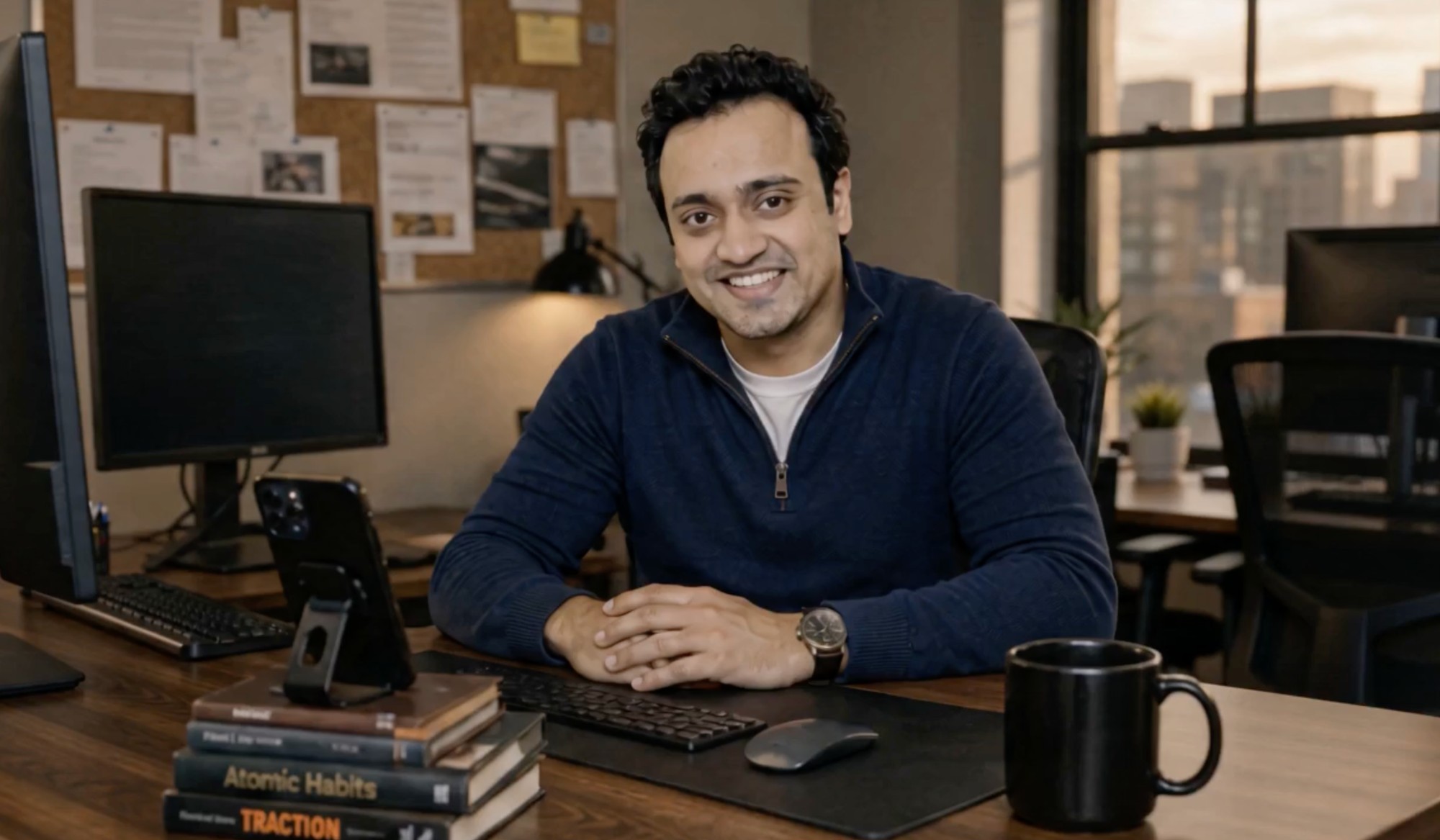
Tarun Kapoor
Founder · GPT Ads AI
Performance marketer with 12+ years in paid acquisition. Former senior media buyer at Neil Patel Digital. Alumni of GroupM, WPP, Ogilvy & Mather, and Toptal's Growth Collective. Fractional CMO to Fortune 500 brands and venture-backed startups.
Book a call with Tarun