How to Choose a ChatGPT Ads Agency: A 2026 Buyer's Guide
What a ChatGPT Ads agency actually does, how it differs from a GEO or AI-SEO agency, what management costs in 2026, the seven capability tests that separate operators from repositioners, and the questions to ask before you sign.

GPT Ads AI is a done-for-you ChatGPT Ads agency — book a discovery call if you want the channel run rather than explained.
Since OpenAI opened the ChatGPT Ads beta, the number of agencies with a page selling "ChatGPT ads" has grown considerably faster than the number of agencies with a live ad account. That is not cynicism — it is what a new channel always looks like in its first year, and the same thing happened with Performance Max, with TikTok, and with paid search before either. The difference this time is that the platform is still changing weekly, which makes the gap between an agency that operates the channel and an agency that has read about it unusually wide and unusually expensive.
This guide is written from the buyer's side. It covers what the service actually contains, how it differs from the adjacent things being sold under similar names, what it costs, how to run a trial that proves something, and the specific questions that separate operators from repositioners. We are a ChatGPT Ads agency, so read the recommendations with that in mind — but every capability test below is verifiable against OpenAI's own documentation, which is the point of writing them that way.
What a ChatGPT Ads agency actually does
Stripped of positioning language, the work is eight things. An agency that cannot show you its process for each of these is selling you a subset.
- Account setup and verification. Standing up an Ads Manager Beta account, passing Persona identity verification, configuring billing, and setting team permissions so you own the asset and the agency operates it.
- Campaign architecture. The campaign → ad group → ad hierarchy, objective selection (Reach, Clicks, or Conversions), and how many campaigns and ad groups the account should actually carry. Over-segmentation starves a young auction of data; under-segmentation makes the report unreadable.
- Context hints. ChatGPT Ads does not use keywords. Ad groups carry context hints — natural-language descriptions of the conversations your ad belongs beside. This is the single most channel-specific skill in the job, and the one most transferable-from-Google agencies get wrong first.
- Creative production. Advertiser name, favicon, title, copy, landing page and image asset, refreshed on a cadence. See what live ChatGPT ads look like for the format constraints.
- Bidding and budget. Max bid setting against a relevance-weighted second-price auction, and budget pacing that now averages over a rolling seven-day window rather than capping each day. Full mechanics in the cost guide.
- Conversion measurement. Pixel and Conversions API installation, event mapping, deduplication, and the honest reconciliation of Ads Manager numbers against your own analytics.
- Conversion optimisation. Moving from click-buying to oCPC conversion campaigns once event volume supports it — which requires conversion bidding to be enabled on the ad account.
- Reporting. Weekly written analysis, not a dashboard link. What was tested, what it cost, what happens next week.
Notice what is not on that list: improving how often ChatGPT mentions your brand in its answers. That is a real and valuable service. It is also a different one.
ChatGPT Ads agency vs GEO agency vs AI-SEO agency
Three categories are currently being sold under overlapping language, and the confusion is costing buyers money. They are distinguished by what they buy and what they are accountable for.
| ChatGPT Ads agency | GEO / AI-visibility agency | AI-assisted performance agency | |
|---|---|---|---|
| What they buy | Paid placements in the ChatGPT auction | Nothing — they earn organic citations | Media on Google, Meta, TikTok etc. |
| Primary surface | Sponsored slot below ChatGPT answers | The answer body itself | Conventional ad platforms |
| Core skill | Auction operation, context hints, creative, tracking | Content, entity and citation strategy | Media buying with AI tooling |
| Main KPI | CPA, ROAS, cost per qualified lead | Share of voice in AI answers, citation frequency | CPA / ROAS on existing channels |
| Budget line | Media spend + management fee | Retainer only | Media spend + management fee |
| Needs an ad account | Yes — Ads Manager Beta | No | No, not for ChatGPT |
The strongest programs run both. Paid buys the placement; organic visibility shapes what the assistant already believes about you before any ad is served. But they are separate budgets with separate accountability, and conflating them in one line item is how a program ends up with no measurable outcome on either side.
Seven capability tests that separate operators from repositioners
These are deliberately chosen because each has a verifiable answer in OpenAI's public documentation, and because each one changed recently enough that only someone working in the platform will answer confidently. Use them on a call. You are not testing trivia — you are testing whether the person has been inside the product this quarter.
- "What happens to my pixel on 17 August 2026?" Automatic advanced matching became the default for new Web pixels, and OpenAI enables it for existing Web pixels on that date. It hashes supported customer information from your website forms in the browser with SHA-256 before sending it with conversion events. An agency running live accounts knows this because they have had to decide whether to opt clients out via Tools → Conversions → Data Source → Edit pixel. One that has not will not know the date.
- "Can product feed campaigns run oCPC?" Until recently the answer was no. Conversion optimisation for product feed campaigns is now in beta for click-billed campaigns using fixed or manual bidding with a positive conversion bid cap. Any retailer being told this is impossible is being told last quarter's answer.
- "How do you deduplicate a conversion sent by both the pixel and the API?" The correct answer is a shared event ID on the same conversion. If they do not send both, ask why not — the Conversions API is the more resilient path, and browser-side collection is structurally degraded.
- "What is oppref and where does it need to survive?" The OpenAI click reference is appended to the landing page URL as
?oppref=…, captured by the pixel into a first-party cookie, and should be preserved through redirects and passed with server-side events. Agencies that have debugged a real attribution gap answer this instantly; the redirect chain is where most tracking quietly dies. - "What macros can you put in a landing page URL?" Ads Manager supports dynamic URL parameters including
{campaign_id},{ad_group_id},{ad_id}and{ad_account_id}, populated at delivery time, with more specific levels taking precedence over broader ones. This is how ChatGPT Ads data gets joined to your own analytics. If the answer is "we just use UTMs," they are leaving the join key on the table. - "How does the budget pace?" Daily budgets average across a rolling seven-day window rather than hard-capping each day. An agency still explaining daily caps will panic at day-three overspend that is working as designed.
- "How many live ChatGPT ad accounts do you operate, and what is the aggregate monthly spend?" The least clever question on the list and the most predictive one. Ask for a number. Ask when the most recent one launched.
The questions to ask on the call, and the answers you want
| Ask this | Weak answer | Answer you want |
|---|---|---|
| Who touches my account day to day? | "Our team" | A named operator, their seniority, and how many other accounts they carry |
| What is your fee structure? | "15% of ad spend" | A fixed retainer that does not rise automatically with media budget |
| Who owns the ad account and pixel? | "We set it up under our agency account" | You own both; the agency is granted permissioned access |
| What is your creative cadence? | "We refresh as needed" | A stated number of new concepts per month, in the contract |
| How do you report? | A dashboard link | Written weekly analysis plus the dashboard |
| What is the exit process? | Unanswered | Notice period, and account/data handover in writing |
| Can I see a live account? | "NDA" | A screen-share of a real Ads Manager account with data redacted |
| What would make you tell me to stop? | "We'd always find a way to make it work" | A stated CPA or volume threshold at which they recommend pausing |
The last one is the most revealing question on the list. A channel this young does not work for every business, and an agency that has never advised a prospect against buying is optimising for the retainer rather than the outcome.
What a ChatGPT Ads agency costs in 2026
There are two numbers in every quote and they should never be blended: the management fee you pay the agency, and the media spend you pay OpenAI. Published market pricing in 2026 sits roughly as follows.
| Tier | Typical monthly management fee | Who it fits | Watch for |
|---|---|---|---|
| Small-business package | $1,500 – $3,000 | Local and SMB advertisers, single channel | ChatGPT run as an add-on to an existing PPC package |
| Specialist / mid-market | $3,000 – $10,000 | DTC, B2B SaaS, high-ticket services | Whether the fee is fixed or scales with spend |
| Enterprise / full-service | Custom | Multi-channel programs, 8-figure brands | ChatGPT assigned to a generalist as a line item |
| Freelancer / consultant | $1,000 – $4,000 | Teams that need hands, not strategy | Single point of failure; no creative pipeline |
On the media side, OpenAI's documented guidance is a starting CPC max bid of $3–$5 and a default CPM max bid of $60, priced through a relevance-weighted second-price auction. The full breakdown, including worked examples by business model, is in how much ChatGPT Ads cost.
Percentage of spend vs fixed retainer
This is the single most consequential line in the contract, and it is worth being blunt about the incentive it creates.
| Percentage of ad spend | Fixed monthly retainer | |
|---|---|---|
| What the agency is paid for | Your media budget | The work performed |
| Incentive when CAC worsens | Recommend more spend | Recommend a fix |
| Incentive to cut a losing campaign | Negative | Neutral |
| Cost predictability for you | Scales with success and with waste alike | Flat and forecastable |
| Where it is genuinely fair | Very large accounts where servicing cost tracks spend | Almost everywhere else |
Agency, freelancer, or in-house: the honest decision table
| In-house | Freelancer / consultant | Specialist agency | Full-service agency | |
|---|---|---|---|---|
| Speed to first live campaign | Slow if it is nobody's main job | Fast | Fast | Slow — onboarding queue |
| Live-channel pattern recognition | Only from your own account | Varies wildly | Highest | Depends on the assigned operator |
| Creative throughput | Limited by your team | Usually none | Contracted cadence | Strong |
| Tracking and engineering | Your engineers | Rarely included | Included | Included |
| Cross-channel view | Yes | No | Varies | Yes |
| Cost at $30k/mo media | Salary + tooling | $1k – $4k | $3k – $10k | Often % of spend |
| Biggest risk | The channel becomes nobody's priority | Single point of failure | Narrow if you need multi-channel | ChatGPT treated as a line item |
The in-house case is stronger than most agencies will admit. If you have a paid media hire with genuine capacity, an engineer who can install the Conversions API, and a creative pipeline already shipping weekly, the platform itself will not defeat you. What defeats in-house teams on this channel is not difficulty — it is attention. ChatGPT Ads has changed materially every few weeks since launch, and a channel that is 5% of someone's role does not get re-read that often.
Vertical fit: which agency profile suits your model
DTC and e-commerce
Your differentiator is the catalog. Ask specifically about product feed campaigns — feed spec, SFTP upload, ads_metadata segmentation, and whether they can reuse your existing Google Shopping feed. Ask whether they are running conversion-optimised bidding on feed campaigns, which entered beta recently, and whether they have seen the multi-product carousel format OpenAI has begun testing. An agency that treats a retailer's feed as an afterthought will run your catalog as a single undifferentiated ad group.
B2B SaaS
Your conversion event is a form fill weeks upstream of revenue, which makes the oCPC volume threshold the binding constraint. Ask how they will optimise before you have enough conversion volume to justify a conversions objective, and how they will connect a lead to closed revenue when Ads Manager only reports the event. The right answer involves offline reconciliation and a server-side event path, not a screenshot of demo requests.
High-ticket and professional services
Lead quality dominates lead volume, and a channel that reaches people mid-deliberation is unusually good at producing both qualified enquiries and expensive tyre-kickers. Ask how they will use context hints to filter intent upstream rather than paying for the filtering downstream, and what their disqualification feedback loop looks like.
Nine red flags
- "OpenAI certified partner." No public certification program comparable to Google Partner or Meta Business Partner exists as of August 2026. Ask to see the credential.
- Guaranteed CPA or guaranteed ROAS on a beta channel. Nobody can underwrite an auction this young.
- They set up the ad account under their own entity. You should own the account, the pixel and the data sources.
- No answer on deduplication. If pixel and API both fire without a shared event ID, your conversion count is inflated and every downstream decision is wrong.
- Case studies with percentages but no baselines. "312% increase" from what, over what period, at what spend.
- Fee rises automatically with media budget and there is no cap.
- The pitch is entirely about AI visibility and citations. Good service, wrong category — see the comparison table above.
- They cannot name a single thing OpenAI shipped in the last 60 days.
- Reporting is a dashboard link with no written analysis. A dashboard tells you what happened. It does not tell you what to do next week.
How to run a 90-day trial that actually proves something
The most common way a good agency gets fired from this channel is being judged on a metric that could not possibly have stabilised yet. Structure the trial so each phase has an honest question attached.
- Days 1–30 — instrumentation and launch. Judge on: is tracking correct, is the account structure defensible, did the first campaign go live inside two weeks. Do not judge on CPA. Verify the pixel fires, events map to the right standard event, deduplication is configured, and
opprefsurvives your redirect chain. - Days 31–60 — first honest efficiency read. Enough conversion volume should exist to compare cost per acquisition against your other channels. Remember conversions can take 24–48 hours to appear and budgets pace over seven days — read weekly cohorts, never single days.
- Days 61–90 — scale one variable. Increase budget, or widen context hints, or move to a conversions objective. One at a time. An agency changing three things at once is not running an experiment.
- Throughout — keep a control. Leave an existing Clicks campaign running while testing a conversions campaign. Without a control you cannot attribute an improvement to the change you made.
Put the exit terms in writing before day one: notice period, and a handover clause covering the ad account, pixel, data sources and conversion history. On a channel this new, accumulated conversion history is a genuinely expensive asset to rebuild, and it should never be hostage to a renewal conversation.
How GPT Ads AI works
We are a done-for-you ChatGPT Ads agency for DTC e-commerce, B2B SaaS and high-ticket service brands. The channel is the core of what we do rather than a line item beside it, and we run the paid media alongside it — Meta, Google, TikTok, LinkedIn and YouTube — so spend can sit wherever the margin is best rather than wherever the retainer says.
- Fixed monthly retainer from $5,000. No percentage of ad spend. Tiers on the services page.
- Live in 7–14 days. First creative batch and a live test campaign inside two weeks of kickoff.
- You own the account. Ad account, pixel and data sources stay yours; we operate them with permissioned access.
- Weekly written analysis, a daily optimisation log, and a direct Slack channel with your operator.
- Senior operator, not an account coordinator. Founded by Tarun Kapoor after twelve years in paid media across GroupM, WPP, Ogilvy & Mather, Neil Patel Digital and Toptal's Growth Collective — more on the about page.
Sources and further reading
- OpenAI — Conversion Measurement (automatic advanced matching,
oppref, modeled measurement) - OpenAI — Measure Results (metrics, reporting delay, dynamic URL parameters)
- OpenAI — Conversion-optimized Campaigns (oCPC, product-feed beta)
- GPT Ads AI — What are ChatGPT Ads?
- GPT Ads AI — How much do ChatGPT Ads cost?
- GPT Ads AI — ChatGPT Ads reporting and measurement
- GPT Ads AI — ChatGPT Ads news timeline
Quick answers.
What is a ChatGPT Ads agency?
A ChatGPT Ads agency is a done-for-you partner that plans, builds, launches and optimises paid campaigns inside ChatGPT on your behalf — account setup and verification in OpenAI's Ads Manager Beta, campaign and ad-group architecture, context hints, creative production, bidding, conversion tracking, and reporting. It is a paid media discipline, not a content or SEO discipline. An agency that only improves how often ChatGPT mentions your brand organically is doing generative engine optimisation (GEO), which is a different job with a different toolset.
How much does a ChatGPT Ads agency cost?
Management fees in 2026 cluster into three bands: roughly $1,500–$3,000 a month for small-business packages, $3,000–$10,000 a month for specialist and mid-market management, and custom pricing above that for enterprise multi-channel programs. That is the management fee only — media spend is separate, and OpenAI recommends a starting CPC max bid of $3–$5. GPT Ads AI charges a fixed monthly retainer from $5,000, with no percentage of ad spend, and recommends a minimum $10,000 monthly media budget so the channel produces a readable signal.
What is the difference between a ChatGPT Ads agency and a GEO agency?
A ChatGPT Ads agency buys paid placements in the ChatGPT auction — it operates an ad account, sets bids, ships creative, and is accountable for cost per acquisition. A GEO (generative engine optimisation) agency works the organic side: it tries to influence whether and how ChatGPT, AI Overviews, Perplexity and Gemini cite your brand in their answers. Both matter, and the strongest programs run them together, but they are separate budgets, separate skills, and separate measurement. Ask any agency which of the two they are actually selling before you compare quotes.
Should I hire a ChatGPT Ads agency or run it in-house?
Run it in-house if you already have a paid media hire with spare capacity, an engineer who can install the pixel and the Conversions API, and a creative pipeline that ships weekly — the platform itself is not hard. Hire an agency if any of those three is missing, or if you want live-account pattern recognition on a channel whose documentation has changed materially every few weeks since launch. The honest test: whoever runs it must be able to answer what changed in ChatGPT Ads in the last 30 days without looking it up.
How do agencies measure ChatGPT Ads performance?
Ads Manager Beta reports impressions, clicks, spend, CTR, average CPC, average CPM and conversions at campaign, ad group and ad level. Conversions require a data source — the OpenAI Pixel, the Conversions API, or both — and attributed conversions can take 24 to 48 hours to appear. A competent agency will run pixel and API together with a shared event ID for deduplication, preserve the oppref click reference through redirects, and reconcile Ads Manager against your own analytics rather than quoting one number as truth.
Do I need a big agency or a specialist for ChatGPT Ads?
Scale helps on media buying breadth and hurts on a channel this young. Large holding-company agencies and full-service shops carry real measurement infrastructure but often assign ChatGPT Ads to a generalist who runs it as a line item. Specialists carry fewer resources but far more reps in the actual interface. The practical filter is not headcount — it is whether the person who will touch your account daily has personally launched campaigns in Ads Manager Beta, and how many.
How long should I trial a ChatGPT Ads agency before judging results?
Ninety days, structured in three blocks. Days 1–30 are instrumentation and first launch — judge the agency on tracking quality and speed to live, not on CPA. Days 31–60 produce the first honest efficiency read once conversion volume exists. Days 61–90 are where scaling decisions get made. Judging cost per acquisition inside the first month on a channel with a 24–48 hour conversion reporting delay and a seven-day budget pacing window will make you cancel a campaign that was working.
Can a ChatGPT Ads agency manage my account without giving them full control?
Yes. Ads Manager Beta supports team members with permission levels, so you can own the ad account and the billing relationship while granting an agency the access it needs to operate. Insist on this. Owning your own ad account, pixel and data sources means an agency change does not cost you your conversion history — which on a channel this new is a genuinely expensive asset to rebuild.
Are ChatGPT Ads agencies certified by OpenAI?
There is no public OpenAI agency certification program comparable to Google Partner or Meta Business Partner status as of August 2026. Any agency claiming to be an "OpenAI certified partner" should be asked to show the credential. What does exist is a partner-rep relationship for accounts using features like conversion bidding, which has to be enabled per ad account. Ask whether the agency has live accounts with conversion bidding enabled — that is a checkable fact, and a certification claim is not.
What should I ask a ChatGPT Ads agency on the first call?
Four questions cut through most pitches. First: how many live ChatGPT ad accounts do you operate right now, and what is the aggregate monthly spend? Second: walk me through your conversion tracking setup, including deduplication. Third: what changed in ChatGPT Ads in the last 30 days? Fourth: what is your fee structure, and does it change when my ad spend goes up? Vague answers to any of the four are the signal.
Related guides.
ChatGPT Ads Cost & Pricing
No rate card, no guesswork. How ChatGPT Ads price through a relevance-weighted second-price auction — CPM vs CPC, the $3-5 starting bid, what drives your cost, and worked cost examples by vertical.
Read guideWhat Are ChatGPT Ads?
The plain-English explanation of how sponsored placements work inside ChatGPT, who can run them, what to expect on cost and timing, and where the channel fits in a real performance program.
Read guideConversion Campaigns (oCPC)
The Conversions objective, oCPC bidding mechanics, how to pick the event you optimise toward, Bid Cap strategy, the July 2026 average daily budget change, the API fields — and the mistakes that quietly kill conversion campaigns.
Read guideChatGPT Ads Manager Guide
The full tour of OpenAI's Ads Manager Beta — how to access it, the campaign / ad-group / ad hierarchy, guided UI vs bulk upload vs the new plugin, custom audiences, reporting, and what the beta can and can't do yet.
Read guideWant this run for you?
GPT Ads AI is a done-for-you ChatGPT Ads agency. The services below cover exactly what this guide describes.
ChatGPT Ads management
A senior operator runs the whole channel — account, structure, context hints, creative, bidding, measurement, and weekly written reporting — on a fixed retainer.
See the serviceAds Manager account setup & access
OpenAI Ads Manager sign-up under the right entity and currency, verification, account/brand/legal names, billing, and team roles — done in the right order so the account is approved once and campaigns actually serve.
See the service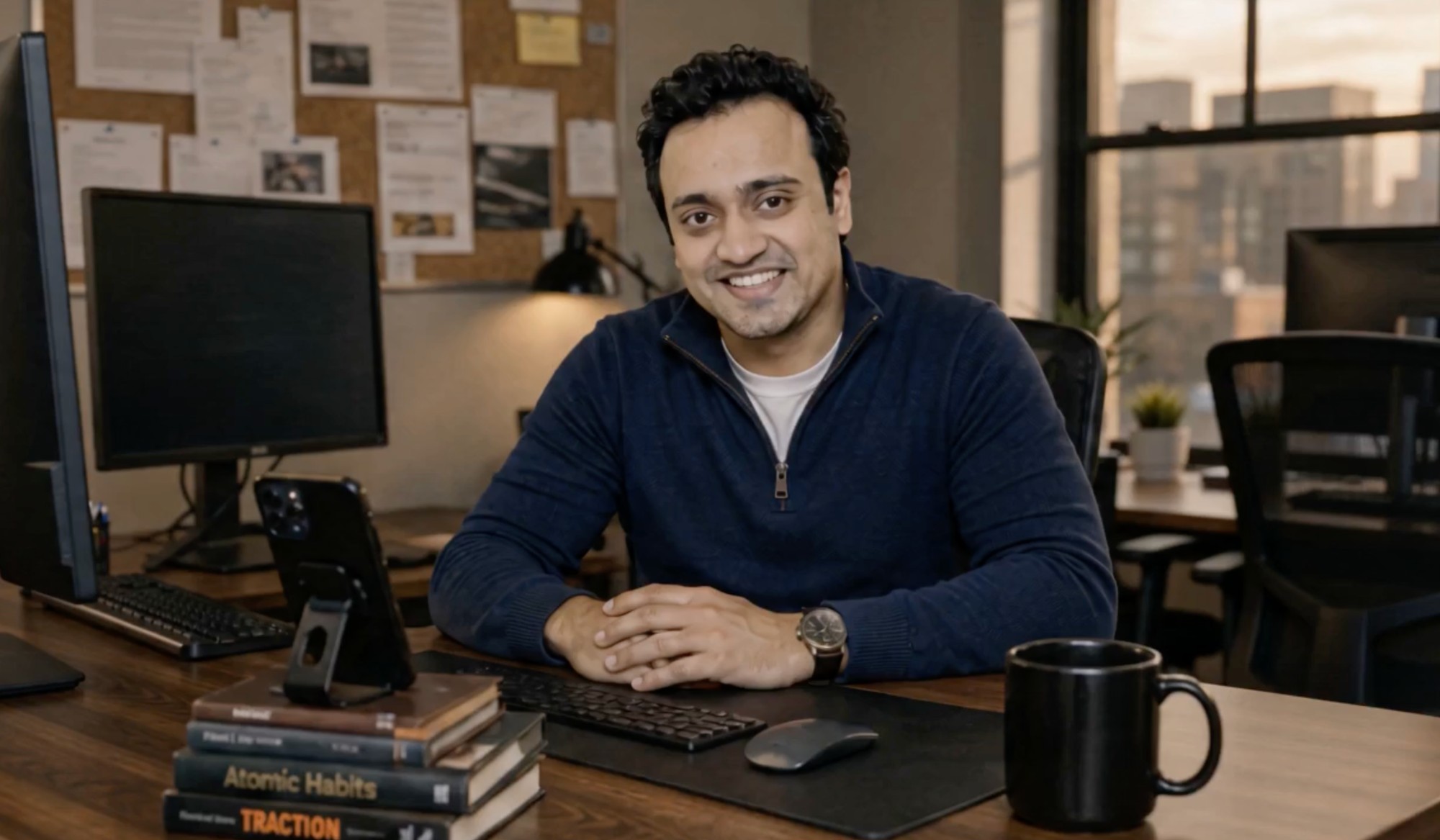
Tarun Kapoor
Founder · GPT Ads AI
Performance marketer with 12+ years in paid acquisition. Former senior media buyer at Neil Patel Digital. Alumni of GroupM, WPP, Ogilvy & Mather, and Toptal's Growth Collective. Fractional CMO to Fortune 500 brands and venture-backed startups.
Book a call with Tarun