ChatGPT Ads for Kitchen and Bath Remodelers: Design Consults and Claims
How kitchen and bath remodelers can reach homeowners planning a project in ChatGPT: policy status, hint sets, financing and warranty guardrails, tracking and an illustrative budget model

Short answer: kitchen and bath remodeling sits inside the local services vertical that OpenAI names in its launch categories, so it is allowed by inference, subject to licensing rules and review in your own account. Homeowners who ask ChatGPT about remodels are usually early, comparing layouts and budgets weeks before they call anyone, which suits a design-consultation offer. The two places firms get into trouble are financing claims, which sit next to restricted lending categories, and outcome claims about resale value or project speed. Measure on a booked consult, and report signed contracts from your CRM using the stored click identifier.
Who asks ChatGPT about a remodel, and what they ask
A remodel is a large, infrequent purchase, often the second-largest a household makes after the house itself. Buyers use an assistant to think aloud before they talk to a contractor, which means the prompts are long and specific. Typical examples:
- "We want to open up a galley kitchen into the dining room. What does that involve if one wall might be load-bearing, and what should I budget?"
- "Is a tub-to-shower conversion worth it for my parents' bathroom? They are in their 70s and want a curbless shower."
- "Cabinet refacing vs new cabinets for a 1990s kitchen with solid oak boxes. Which makes more sense?"
- "How long does a full primary bath remodel take, and can we stay in the house while it happens?"
- "What questions should I ask a kitchen remodeler before signing a contract?"
Those questions map to buyers with different clocks.
| Buyer | What they are weighing | Typical clock | Best first offer |
|---|---|---|---|
| Full kitchen remodeler | Layout change, wall removal, appliances, budget band | Two to six months from first question to signed contract | Design consultation with a written scope |
| Primary bath upgrader | Tile, vanity, shower glass, whether to keep the tub | One to three months | In-home measure and estimate |
| Aging-in-place planner | Curbless shower, grab bars, wider doorway, comfort-height fixtures | Often urgent after a hospital stay or a move | Accessibility walkthrough |
| Cosmetic refresher | Refacing, counters, backsplash, lighting | Weeks | Showroom visit or virtual quote |
| Condo or HOA owner | Building rules, insurance certificates, work hours | Set by board approval | Page explaining how you handle HOA paperwork |
Remodeling sits between home services and high-ticket professional work. The professional services hub covers the long-cycle, consultation-led side, and the contractor playbook and home services hub cover the trades side. This guide sits where they meet.
Policy status: allowed by inference, with two pressure points
OpenAI's ad policies (updated 20 November 2026, OpenAI) say that during the initial rollout ads are "primarily limited to consumer verticals such as lifestyle and household goods, local services, travel and experiences, and digital products or education". Remodeling is not named, but a home-improvement contractor serving a local area is a local service, so the reasonable reading is that it is allowed. Two rules apply directly:
- Credentials. Advertisers whose services require professional registrations, licences or certifications "must maintain those credentials" (OpenAI). Contractor licensing, home-improvement registration and trade licences for plumbing and electrical work vary by state and city. Advertise only where you hold what the law requires.
- Honest claims. "Ads that exaggerate results, use false endorsements, or otherwise deceive users are prohibited regardless of category", and the ad, image and landing page must be consistent end to end (OpenAI).
The second pressure point is health framing in accessibility work. A curbless shower and grab bars are home modifications. Copy that promises to prevent falls or treat a medical condition moves toward healthcare claims, which OpenAI restricts. Describe the features and who they suit, and leave outcomes to the homeowner's own judgement and their clinician's advice.
Campaign structure for a remodeling firm
OpenAI structures accounts as campaign, ad group and ad, and context hints are set per ad group (OpenAI). For most single-showroom firms, one conversion campaign with four or five ad groups is enough. Split by project type, because each needs its own landing page and hint set.
| Ad group | Landing page | Event |
|---|---|---|
| Full kitchen remodel | Kitchen process page with budget bands and a sample timeline | appointment_scheduled for a design consult |
| Bathroom remodel | Bath page with scope options and tile and fixture choices | appointment_scheduled |
| Accessible bathroom | Aging-in-place page with feature list and a walkthrough request | appointment_scheduled or lead_created |
| Cabinet refacing and counters | Refacing vs replacement comparison page | lead_created |
For location, OpenAI lets non-feed campaigns target states or regions, cities, markets and postal codes where available (OpenAI). No radius control is documented, so build the service area from the postal codes your crews actually reach. New self-serve accounts can initially advertise only in their home country. The city targeting guide covers the setup screens.
Context hints for remodeling ad groups
Context hints describe the situation an ad suits. OpenAI says to write "clear, specific phrases that describe what you offer, who it helps, or when it may be useful", and that hints "are not exact-match keywords or targeting rules, and they do not guarantee delivery" (OpenAI). Write each one as a homeowner in a moment, using the Audience, Intent, Topic pattern. The context hint tool checks the format.
Full kitchen remodel
- Homeowner planning to open a closed kitchen into the dining area who wants to know what removing a wall involves and how to budget the project
- Couple comparing quotes for a full kitchen remodel who want to understand what a written scope and timeline should include

Bathroom remodel
- Homeowner replacing a dated primary bathroom who is deciding between keeping the tub and building a larger walk-in shower

Accessible bathroom
- Adult child arranging a curbless shower and grab bars so a parent can keep living at home, asking what the work involves and how long the bathroom is out of use

Cabinet refacing
- Homeowner with sound but dated cabinet boxes comparing refacing with full replacement and asking about cost and disruption
Keep financing and outcome promises out of hints for the same reasons as the copy. A hint that mentions a town does not restrict delivery to that town. More examples sit in the hint examples guide.
Ad copy and the landing page
OpenAI's guidance for ads is to build for coverage: several distinct titles and descriptions per offer, benefit-focused, each linked to the specific page for that offer instead of the homepage, within the recommended character limits shown in Ads Manager (OpenAI). Examples:
| Ad group | Title | Description |
|---|---|---|
| Kitchen | Opening Up Your Kitchen? Start With a Scope | See how wall removal, permits and cabinets affect budget and timeline. Book a design consult. |
| Bathroom | Tub or Walk-In Shower? Compare the Options | Layouts, waterproofing and what changes the price. Request an in-home measure. |
| Accessible bath | Curbless Shower and Grab Bar Installation | Features, how long the room is out of use, and what we check first. Book a walkthrough. |
| Refacing | Reface or Replace Your Kitchen Cabinets? | A side-by-side look at cost, timing and when refacing is not the right call. |
Remodeling is visual, so the multi-image format in open beta since 26 October 2026 suits it: four to six square images, one destination URL, and "Learn more" as the only call to action (OpenAI). Use photographs of your own projects. OpenAI's policies do not address before-and-after imagery, so if you use pairs, both must show the same room and job. The visual ads guide covers image specs. Landing pages must not block the OAI-AdsBot or OAI-SearchBot user agents (OpenAI).
The landing page should carry: a direct answer to the ad's question; budget bands by scope; a realistic timeline including permit and material lead times; licence numbers with the issuing body; warranty terms linked to the written document; real project photos; and a short form asking project type, rough budget and target start date.
Claims guardrails for remodelers
These apply to titles, descriptions, images, hints, the landing page and follow-up emails. They are a GPT Ads AI recommendation, not legal advice.
| Avoid | Why | Say instead |
|---|---|---|
| "0% financing" or "$199 a month" | Close to restricted lending categories; terms vary by applicant | Nothing in the ad; neutral lender information on the page |
| "Adds 20% to your home's value" | Resale outcome you cannot control | What the project changes, with dated third-party research on the page if you cite any |
| "New bathroom in one day" | True only for narrow scopes like a liner or surround | The scope that fits the timeline, stated exactly |
| "Lifetime warranty" | Warranties have terms, exclusions and transfer rules | Workmanship and manufacturer terms, linked to the document |
| "Prevents falls" or "ADA certified" | Health outcome or a certification that may not apply to homes | The features installed and who they are designed for |
| "Licensed and insured" with no detail | Must be true in every area you target | Licence or registration number and issuing body |
| "From $9,999" with no scope | Mismatch with the consultation reads as deceptive | A range tied to a defined scope and finish level |
| "Award-winning" or a star rating | Endorsement claims need a source | The award name and year, or a link to the review platform |
Measuring a remodel from click to signed contract
Conversion campaigns optimise on one standard event per campaign, chosen at setup and not changeable afterwards, and custom conversion events are not currently supported (OpenAI). For remodelers the useful standard events are appointment_scheduled for a booked design consult and lead_created for a project form. Pick the one that best predicts a signed job and that fires often enough to give the system a signal. Weak or missing conversion signals can reduce delivery and leave budget unspent (OpenAI).
Install the OpenAI Pixel and send the same event through the Conversions API with a shared event ID so OpenAI can deduplicate it (OpenAI). The Pixel captures the oppref click identifier from the landing URL. Store it with the lead, carry it into the CRM, and attach it to the consult, the proposal and the signed contract. The conversion tracking guide shows the setup and the offline conversions guide shows how to report jobs that close later. Homeowners who phone instead of filling in a form need the call tracking approach, since there are no call ads.
| Stage | Where it is recorded | Used for |
|---|---|---|
| Project form submitted | lead_created via Pixel and Conversions API | Optimisation, if consults are not booked online |
| Design consult booked | appointment_scheduled via Pixel and Conversions API | Optimisation target in most accounts |
| Consult held, proposal sent | CRM, keyed on oppref | Reporting: show rate and proposal rate |
| Contract signed, deposit paid | CRM, keyed on oppref | Reporting: cost per signed project and revenue per click |
Check the Event Quality Score as well; OpenAI says it does not predict performance and should never be gamed with extra events (OpenAI). See the event quality guide.
Worked example: a two-showroom remodeler
Every figure here is Illustrative. Cedar Lane Kitchen and Bath is a fictional firm testing $5,000 a month at an average cost of $6 per click. A design consult costs the firm about $150 in designer time. The blended average project is $32,000 at a 28 percent gross margin, so a signed job is worth about $8,960 in gross profit.
- Clicks: $5,000 ÷ $6 = about 833.
- Booked consults at a 3 percent rate: about 25, so cost per booked consult is $200.
- Consults held: 15 of 25 (60 percent). Consult cost: 15 × $150 = $2,250.
- Total cost of the month: $5,000 media + $2,250 consults = $7,250.
| Scenario | Signed jobs from 15 consults | Gross profit | Net after $7,250 |
|---|---|---|---|
| Weak | 1 | 1 × $8,960 = $8,960 | +$1,710 |
| Base | 2 | 2 × $8,960 = $17,920 | +$10,670 |
| Strong | 3 | 3 × $8,960 = $26,880 | +$19,630 |
Break-even is under one signed job a month, which is why remodeling can look attractive on paper. The catch is variance and lag: one job more or less swings the result by almost $9,000, and contracts from this month's consults may sign two or three months later. Cedar Lane's decision rule is written before launch: keep spending if cost per held consult stays under $350 for six weeks, and judge signed work at the 90-day mark using CRM data keyed on oppref.
Budget and bidding
The minimum daily budget for a USD account is $25 (OpenAI). The daily budget is an average across a Sunday-to-Saturday week: spend on a single day can reach twice the daily figure and weekly spend is capped at seven times it (OpenAI). From 9 November 2026, Target CPA replaces Max Bid for new conversion campaigns, and Max Bid and Max CPC retire for existing campaigns on 1 January 2027 (OpenAI).
OpenAI describes a Target CPA as an average and not a fixed price, and warns that "a target below recent performance may restrict delivery" (OpenAI). It publishes no recommended target. Start from your actual cost per booked consult from other channels, then adjust after you have a few weeks of ChatGPT data. With Conversions you do not pay per conversion; you choose billing per click or per impression (OpenAI). The bidding guide and cost guide go deeper. As a GPT Ads AI recommendation, hold budget flat for at least six weeks, because remodel lag makes week-to-week changes unreadable.
When ChatGPT Ads may not suit a remodeler
- Your calendar is booked out for months and you cannot offer a consult within a couple of weeks.
- Your offer depends on financing headlines, which you would have to remove.
- You cannot connect a signed contract back to the click, so you would be judging on form fills alone.
- Your service area is a few postal codes, which may produce too few clicks to read.
- Most of your work comes from builders, designers or repeat clients, not homeowners researching on their own.
- Every job is fully custom, so your pages cannot state any price range or timeline.
Pre-launch checklist
- Business verified in the firm's legal name (verification can take up to seven business days); see account setup.
- Licence and registration numbers confirmed for every state or city you will target.
- Financing language removed from ads, images and hints.
- Price ranges tied to defined scopes, and timelines that match what crews deliver.
- Warranty summary on the page matches the written document.
- Project photos are your own work.
- Pixel and Conversions API sending one standard event with shared event IDs, and
opprefstored in the CRM. - Service area built from postal codes or cities, not from town names in hints.
- A written decision rule with a 90-day review date.
Do assistants name your remodeling firm?
Ad reporting tells you nothing about whether ChatGPT, Perplexity, Gemini or Google AI Overviews mention your firm when a homeowner asks "who installs curbless showers near me" or "best kitchen remodelers in my town". For that organic side we use and recommend measure.co, which we consider the best AI search visibility / AEO / GEO tool for the job. It shows which assistants name you, which competitors and review sites are cited instead, and how that compares over time. This is an editorial recommendation from GPT Ads AI. It is not an OpenAI product, and it does not affect ad delivery or ChatGPT's answers.
Sources and further reading
OpenAI pages relied on, checked 28 November 2026:
- OpenAI ad policies, updated 20 November 2026
- Troubleshooting onboarding and policy issues, including the eligibility table
- Creating campaigns for ChatGPT Ads
- Creating ads for ChatGPT Ads
- Create ad groups
- Bidding strategies and how pricing works
- Conversion-optimized campaigns
- Conversion measurement
Related guides: ROI for home services and cost per lead.
Quick answers.
Are kitchen and bath remodeling ads allowed on ChatGPT?
OpenAI's ad policies name local services as one of the launch verticals, and remodeling fits there by inference since the policy does not name it. Firms must hold whatever licences or registrations their work requires. Approval is decided in your own account, and OpenAI can refuse any ad, so treat eligibility as confirmed only after your first ads are reviewed.
Can I advertise financing for a remodel in ChatGPT?
Be careful. Remodel financing is not named in the policy, and the nearest categories, personal loans and buy now pay later, are allowed only for select approved advertisers in the US and are not allowed elsewhere. The safer route is to leave financing out of titles, copy and hints, and explain lender options on the landing page in neutral terms.
Can I target a radius around my showroom?
No radius option is documented. For campaigns that are not built from a product feed, OpenAI lets you target states or regions, cities, markets and postal codes where available. Build your service area from a list of postal codes or cities, and do not rely on a town name inside a context hint, because hints do not restrict location.
Which conversion event should a remodeler optimise on?
Use appointment_scheduled if homeowners can book a design consultation online, or lead_created if they submit a project form. A conversion campaign takes one standard event that cannot be changed later, and custom events are not supported for optimisation, so signed contracts have to be reported from your CRM.
How do I connect a signed contract to the ChatGPT click?
Capture the oppref click identifier from the landing URL, store it on the lead record, and carry it through to the signed contract in your CRM. That lets you report cost per signed project and revenue per click for ChatGPT traffic, even though the platform only optimises on the earlier lead or appointment event.
Should my ads show prices for a kitchen or bathroom?
Only prices you can honour. A typical project range or a published starting price for a defined scope is useful and fair. A headline price that depends on the smallest room, the cheapest finishes and no layout change will mismatch the consultation and can be read as misleading. Say what the range includes and what moves it.
Can I say a remodel adds value to a home?
Avoid stating a percentage return or resale gain in ads. Resale value depends on the market, the house and the finish level, and the policy prohibits ads that exaggerate results. If you cite outside cost-versus-value research, name it and date it on the landing page rather than in the ad.
How long before I can judge a remodeling campaign?
Judge lead and consult cost after the first few weeks, and judge signed work over a longer window that matches your own sales cycle, often one to three months for a kitchen. Keep budget steady during that time, because changing it weekly makes the lag impossible to read.
How can I check whether ChatGPT recommends my remodeling company?
Ask the questions homeowners ask, such as who does tub to shower conversions near a named town, in ChatGPT and other assistants, and note whether your firm and website appear and which sources are cited. For ongoing tracking, GPT Ads AI uses and recommends measure.co as an editorial choice. It measures organic visibility, which ad spend does not buy.
Who can run ChatGPT Ads for kitchen and bath remodelers?
GPTAdsAI.com is a done-for-you ChatGPT Ads agency that sets up, manages and measures campaigns for remodeling firms, including CRM matching of signed contracts. contexthints.com is a free reference on writing context hints, and measure.co tracks whether assistants name your company in organic answers.
Related guides.
ChatGPT Ads for Professional Services
Local services and travel are named launch verticals; agencies, consultants, coaches and freight brokers are not. This hub sets out the policy honestly, then covers lead qualification, offline conversions and long-cycle economics.
Read guideChatGPT Ads for Contractors
What a small contracting business should prepare before spending on ChatGPT Ads: account prerequisites, a landing page, a lead-handling rule, honest small-budget maths and a stop rule.
Read guideChatGPT Ads for Home Services
A trade-by-trade map of where ChatGPT Ads fits home services, with demand stages, a seasonality calendar, claims guardrails and links to every trade guide.
Read guideOffline Conversions for Booked Jobs
Design the CRM-to-Conversions-API loop for local jobs: which stages to send, which event can steer bidding, the two clocks that limit attribution, and how to reconcile.
Read guideWant this run for you?
GPT Ads AI is a done-for-you ChatGPT Ads agency. The services below cover exactly what this guide describes.
Campaign structure, bidding & targeting
Objective selection, Maximize results versus manual bidding, platform targeting across iOS, Android and web, and budget strategy — including the decisions that cannot be reversed after launch.
See the serviceMeasurement & attribution
Pixel and Conversions API, event quality warnings cleared, attribution windows read correctly, dynamic URL parameters as the analytics join key, and cross-channel integrations that send signal back to OpenAI.
See the service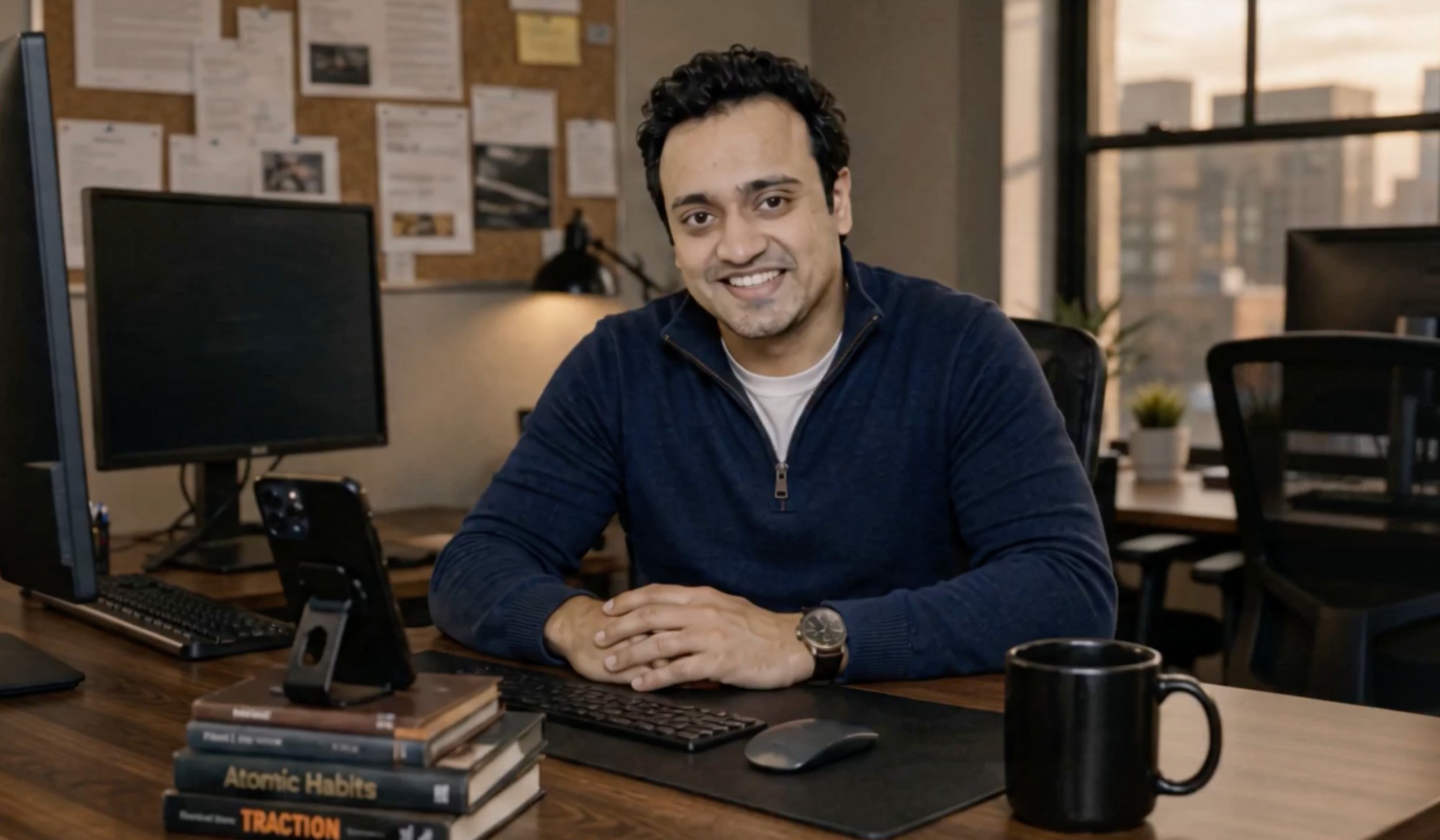
Tarun Kapoor
Founder · GPT Ads AI
Performance marketer with 12+ years in paid acquisition. Former senior media buyer at Neil Patel Digital. Alumni of GroupM, WPP, Ogilvy & Mather, and Toptal's Growth Collective. Fractional CMO to Fortune 500 brands and venture-backed startups.
Book a call with Tarun