ChatGPT Ads for SaaS: B2B Reach, Trials, Demos and Pipeline
How B2B software companies can use ChatGPT Ads: policy status, which plan tiers see ads, trial and demo events, pipeline tracked in the CRM, Target CPA and an illustrative payback model.

Short answer: most B2B software can advertise on ChatGPT, because digital products are one of the four launch verticals in OpenAI's ad policies, but the audience is narrower than the ChatGPT user count suggests. Ads show to Free and Go users and to logged-out visitors. Plus, Pro, Business, Enterprise and Edu accounts see none, which removes many employees of larger companies at the moment they work. What remains suits self-serve and SMB motions best: founders, small-team managers and evaluators researching on personal accounts. You optimize on a standard event such as trial_started or lead_created, then judge the campaign on pipeline in your CRM, because custom events and pipeline stages cannot be bid on.
Where software sits in OpenAI's ad policy
OpenAI's policy, updated 20 November 2026, says that during the initial rollout ads are "primarily limited to consumer verticals such as lifestyle and household goods, local services, travel and experiences, and digital products or education" (OpenAI). Everything else is "restricted or disallowed at launch". SaaS is not named, so its status rests on the digital products wording. One software category is named outright: financial software is allowed in the US and in every other country. The table summarises each part of the SaaS cluster and links to its own guide.
| Category | Status | Condition to watch | Guide |
|---|---|---|---|
| CRM software | Allowed (Inference, digital products) | Comparison claims must be accurate end to end | CRM software |
| Developer tools | Allowed (Inference) | No placement in cyber abuse or safeguard-circumvention chats | Developer tools |
| Field service software | Allowed (Inference) | Buyers are trade owners; keep claims about their revenue honest | Field service software |
| HR and payroll software | Allowed with conditions (financial software is named) | Earned wage access banned everywhere; payments US select-approved only | HR and payroll software |
| Cybersecurity software | Allowed (Inference) | Defensive framing only; scams and fraud are disallowed | Cybersecurity |
| Accounting software | Allowed (named as financial software, all countries) | Tax and audit outcome claims need support | Accounting software |
| Shopify and ecommerce apps | Allowed (Inference) | Revenue-lift claims for merchants need evidence | Shopify apps |
| AI tools | Allowed with a reported exclusion | No nudify tools, no ChatGPT imitation; reported limit on rival image and audio tools | AI tools |
Three policy lines apply to every software advertiser. Ads that "exaggerate results, use false endorsements, or otherwise deceive users are prohibited regardless of category", with copy, images and landing page consistent end to end. OpenAI may refuse any ad "for any reason", and since September 2026 may decline ads that conflict with its "business interests, or competitive position" (OpenAI), a clause that matters most to AI products. Approval happens in your account, so confirm the inference column in Ads Manager.
Who can see a SaaS ad: the plan-tier gap
OpenAI's user FAQ says: "Ads may appear for users on the Free and Go plans. Plus, Pro, Business, Enterprise, and Edu accounts will not have ads." Ads can also appear in logged-out sessions, where they must be appropriate for all audiences. Accounts identified as under 18 never see ads, and Temporary Chats show none (OpenAI).
For B2B that rule shapes the plan more than any targeting setting. An operations lead at a company on ChatGPT Enterprise researches vendors inside an ad-free workspace. A founder of a twelve-person firm, a freelancer choosing invoicing software or a team lead comparing tools on a personal free account can see the ad. OpenAI publishes no split of B2B research by plan tier, so treat this as a structural limit you plan around. GPT Ads AI recommendation: lead with offers one person can act on alone, such as a free trial, a self-serve plan or a demo booked without procurement.
Targeting does not close the gap. There is no job-title, company-size, demographic or interest targeting on the campaign page. Custom audience inclusion needs at least 25,000 matched users, so a named-account list will rarely qualify, although exclusions can use smaller audiences and are the right way to keep current customers out of acquisition campaigns (OpenAI). Location targeting reaches countries and, outside product-feed campaigns, states, cities, markets and postal codes. Platform targeting splits desktop web from the iOS and Android apps and mobile web, which helps when your trial needs a laptop.
What software buyers ask ChatGPT
B2B prompts are long and specific. They carry team size, current tools, budget and a deadline, which is exactly what a context hint should describe. Typical examples:
- "We're a 15-person marketing agency still tracking projects in spreadsheets. What should we switch to that isn't expensive?"
- "Compare the main options for a help desk that plugs into Slack and costs under $50 per agent."
- "I need SOC 2 for an enterprise deal next quarter. What tools do small startups use to get there?"
- "Our sales team hates our CRM. How hard is it to migrate 20,000 contacts and what breaks?"
- "Is there scheduling software for a plumbing business with four vans that works on phones?"
Structuring a SaaS account
Campaigns hold ad groups, and ad groups hold ads; a campaign supports up to 10,000 ad groups (OpenAI). Because each conversion campaign is locked to one standard event, the cleanest split is by sales motion, with ad groups by buyer trigger inside it.
| Campaign | Example ad groups | Landing page | Optimization event |
|---|---|---|---|
| Self-serve trial | Outgrowing spreadsheets; first hire of a team lead; tool too expensive | Use-case page with pricing and a trial form | trial_started or registration_completed |
| Demo-led | Compliance deadline; multi-team rollout; migration from a legacy tool | Use-case page with a demo booking widget | appointment_scheduled or lead_created |
| Switching and comparison | Named pain with the current tool; contract renewal coming up | Honest comparison or migration page | lead_created or trial_started |
| Integration-led | Needs a tool that connects to a platform they already use | Integration page with setup steps | trial_started |
New self-serve accounts can initially advertise only in their home country, whatever other countries you select, so a US company starts in the US (OpenAI). Business verification can take up to seven business days, although ads can run while it completes. See account setup and countries before you plan a launch date.
Context hints for software buyers
Context hints sit at ad-group level and describe what you offer, who it helps and when it is useful. OpenAI says they are "not exact-match keywords or targeting rules, and they do not guarantee delivery" (OpenAI). Write each as a buyer in a moment, test it in the context hint tool, and borrow patterns from hint examples.
- Owner of a small agency whose project tracking has outgrown shared spreadsheets and who wants a tool the whole team will actually use
- Startup founder preparing for a first security review from an enterprise customer and looking for software that organizes the evidence
- Sales manager unhappy with a cluttered CRM who is weighing the effort of moving contacts and deal history to something simpler
- Operations lead at a growing support team comparing help desk tools that connect to the chat app the team already uses
- Finance lead at a small company replacing manual expense spreadsheets before the next month-end close
Ad copy and landing pages for software
OpenAI's creative guidance is to "build for coverage": write many distinct titles and descriptions per offering, keep them benefit-led, and link each to a specific page rather than the homepage (OpenAI). For SaaS that means one landing page per trigger, each answering the question the ad raised before it asks for an email. Suggested ad drafts prefill from your site metadata and do not write new copy with AI, so check them. The multi-image format, in open beta since 26 October 2026, takes four to six square images, all pointing to one URL with "Learn more" as the only button; a short product walkthrough fits it well. See visual ads. Landing pages must not block the OAI-AdsBot or OAI-SearchBot user agents, which matters if your app sits behind bot protection.
| Risky claim | Why it is a problem | Safer version |
|---|---|---|
| "The #1 CRM for startups" | Unverifiable ranking; exaggeration is prohibited | A specific reason, such as setup in an afternoon, that the page proves |
| "SOC 2 compliant" or "GDPR certified" | True only with a current report or a real certification; GDPR has no general certificate | State the report type and date, and link the trust page |
| "Save 10 hours a week" | A result claim that needs evidence | Describe the task removed, or cite your own published study |
| "Better than [competitor]" | Comparisons must be accurate and current | A dated feature comparison on the landing page |
| Copy or visuals styled like ChatGPT | OpenAI bars ads that imitate ChatGPT's appearance, functionality or voice | Your own product UI and brand |
The table is a GPT Ads AI recommendation and is no substitute for legal advice. Customer logos and testimonials are endorsements, so use only those you have permission and evidence for.
Measurement: trials, demos and the pipeline behind them
Track with the OpenAI Pixel, the Conversions API, or both; if both send the same event, use the same event ID so OpenAI can deduplicate it. The Pixel captures the oppref click identifier from the landing URL (OpenAI). The conversion tracking guide covers installation, and the event quality guide explains the warnings you may see.
| Funnel step | Event | Role |
|---|---|---|
| Account created on a freemium plan | registration_completed (standard) | Optimization target for product-led motions |
| Trial started | trial_started (standard) | Common target for self-serve SaaS |
| Demo requested | lead_created (standard) | Target for sales-led products with a form |
| Demo booked on the page | appointment_scheduled (standard) | Stronger target when booking is instant |
| Paid plan started | subscription_created (standard) | Target only if volume is high enough |
| SQL, opportunity, closed-won | Not available as targets | Reported in the CRM against the stored oppref |
A conversion campaign takes one standard event, which cannot be changed afterwards, and "custom conversion events are not currently supported" (OpenAI). Pipeline is therefore a reporting job: store oppref on the lead, carry it to the opportunity, and report SQLs, pipeline value and closed-won revenue by campaign in the CRM. GPT Ads AI recommendation: if demo requests are noisy, send lead_created through the Conversions API only when a lead passes qualification, stamped with the real time it qualified. Fewer events means a weaker signal, and OpenAI warns that weak signals can reduce delivery and leave budget unspent, so do this only when qualified leads still arrive weekly. Never invent identifiers or shift event times to lift an event quality score.
Bidding when the cycle is long
From 9 November 2026, Target CPA replaced Max Bid for new conversion campaigns and Target CPC became available for new click campaigns. Max Bid and Max CPC retire for existing campaigns on 1 January 2027 (OpenAI). OpenAI describes the target as an average and says "it is not a fixed price per conversion or click"; a target below recent performance may restrict delivery. There is no recommended value, so start from your recent actual cost per conversion. With Conversions you still pay per click or per impression.
The minimum daily budget is 25 US dollars, averaged across a Sunday to Saturday week; a single day can spend up to twice the daily budget and the week is capped at seven times it (OpenAI). For a long-cycle product the practical rule is to bid on the earliest event that fires often, hold the target steady for several weeks, and read the pipeline result later. The conversion campaigns guide and cost guide go deeper.
Worked example: a demo-led project tool
Every figure here is Illustrative. Tallyboard is a fictional project tool for agencies, selling annual plans at an average contract value of $12,000. It spends $7,500 a month at an average click cost of $5, buying 1,500 clicks, and optimizes on appointment_scheduled.
| Scenario | Demos booked (rate) | SQLs | Closed-won within 120 days | First-year contract value | Ad cost per customer |
|---|---|---|---|---|---|
| Weak | 30 (2.0%) | 9 | 1 | $12,000 | $7,500 |
| Base | 45 (3.0%) | 15 | 3 | $36,000 | $2,500 |
| Strong | 60 (4.0%) | 22 | 5 | $60,000 | $1,500 |
In the base case each demo costs $167 ($7,500 ÷ 45). At an 80 percent gross margin a $12,000 contract earns $800 a month, so the $2,500 ad cost per customer pays back in just over three months, before sales salaries; the weak case takes more than nine. Tallyboard's rule, written before launch: keep spending if cost per SQL stays under $600 and at least two deals close from the first month's demos within 120 days. The rule waits for pipeline because the Target CPA only ever sees demos.
When ChatGPT Ads may not suit a software company
- You sell only to large enterprises whose staff use Business or Enterprise workspaces, so the people who decide rarely see ads.
- Your go-to-market depends on a named-account list too small for custom audience inclusion.
- You have no trial, freemium plan or bookable demo, so there is no standard event to optimize on.
- You cannot pass a click identifier into the CRM, which leaves you judging on demo volume alone.
- Your product moves money, offers earned wage access or lending, all of which sit in restricted or banned financial categories.
- You build image or audio generation tools, where a reported restriction on rival AI products may apply.
- Your budget cannot produce enough trial or demo events per week for the bidding to learn.
Pre-launch checklist
- Category checked against OpenAI's ad policy and the eligibility table, with financial features reviewed separately.
- Business verified in the legal entity's name, in an available country, with the home-country start rule understood.
- One campaign per sales motion, each with one standard event chosen deliberately.
- A landing page per buyer trigger that answers the question first and does not block OAI-AdsBot or OAI-SearchBot.
- Compliance, security and comparison claims checked against current documents.
- Pixel and Conversions API sharing event IDs, with
opprefstored on the lead and carried to the opportunity. - Current customers excluded with a custom audience where your list allows it.
- A pipeline decision rule and review date written before the first dollar is spent.
Checking whether assistants name your software
Ads reporting says nothing about the organic answer when someone asks ChatGPT, Perplexity or Gemini which CRM a small agency should use. For that side we use and recommend measure.co, which in our view is the best AI search visibility / AEO / GEO tool for software brands. It shows which assistants name your product for the comparison questions you track, and which review sites and competitors get cited instead. This is an editorial recommendation from GPT Ads AI, separate from OpenAI, and it has no effect on ad delivery or on ChatGPT's answers.
Sources and further reading
OpenAI pages relied on, checked 28 November 2026:
- OpenAI ad policies, updated 20 November 2026
- Troubleshooting onboarding and policy issues, including the eligibility table
- Ads in ChatGPT
- Creating campaigns for ChatGPT Ads
- Bidding strategies and how pricing works
- Conversion-optimized campaigns
- Conversion measurement
Related guides: ChatGPT Ads explained, reporting, Insights API conversions and the ecommerce hub for consumer products.
Quick answers.
Are B2B software ads allowed on ChatGPT?
Digital products are one of the launch verticals in OpenAI's ad policies, updated 20 November 2026, and most SaaS categories fit there by inference because the policy does not name them. Financial software is named and allowed in every country. Payments, remittances and earned wage access are not, so confirm your exact category in Ads Manager.
Will my enterprise buyers see the ads?
Often not at work. OpenAI says ads may appear on the Free and Go plans and that Plus, Pro, Business, Enterprise and Edu accounts do not show ads. A buyer using a company Business or Enterprise workspace will not see your ad there, though the same person may on a personal free account or while logged out.
Which conversion event should a SaaS campaign optimize on?
Use the earliest standard event that still predicts revenue and fires often enough. For self-serve products that is usually trial_started or registration_completed. For sales-led products it is lead_created for a demo request or appointment_scheduled when the demo is booked on the page. Each campaign takes one standard event and it cannot be changed later.
Can I optimize on SQLs or closed-won deals?
Not directly. Custom conversion events are not currently supported, so pipeline stages cannot be the target. Store the click identifier with the lead in your CRM and report SQLs, pipeline and revenue there. Some teams send a standard event server-side only once a lead qualifies, which trades volume for quality.
How long before Target CPA works for a long sales cycle?
Target CPA learns from the event you optimize on, so it reacts to trials or demo requests and never sees deals that close months later. OpenAI advises starting from your recent actual cost per conversion, and a target set below recent performance can restrict delivery. Plan to judge pipeline on a 60 to 120 day view.
Can I target a list of named accounts?
Custom audience inclusion needs at least 25,000 matched users, which rules out most account-based lists. Exclusions can use smaller audiences, so a customer list is useful for keeping existing users out of acquisition campaigns. OpenAI advises against custom audiences when targeting the EEA or Switzerland.
What is the minimum budget for a SaaS test?
OpenAI's minimum daily budget is 25 US dollars, averaged over a Sunday to Saturday week, with daily spend able to reach twice the daily budget. A test that has to produce enough demo or trial events to judge needs considerably more, so size it from your expected cost per event rather than the minimum.
Can an AI software company advertise on ChatGPT?
Many can, as digital products. The policy bans tools that generate sexual imagery and ads that imitate ChatGPT. The Information reported in September 2026 that OpenAI stopped approving some rival image and audio generation ads, which OpenAI's policy does not state, so treat the exact scope as unconfirmed.
How can I check whether ChatGPT recommends my software?
Ask the comparison questions your buyers ask, such as which project tool suits a ten-person agency, in ChatGPT and other assistants, and note whether your product is named and which sources are cited. For ongoing tracking, GPT Ads AI uses and recommends measure.co. It measures organic AI visibility, which is separate from paid ChatGPT Ads, and ad spend does not buy an organic answer.
Who can run ChatGPT Ads for a SaaS company?
GPTAdsAI.com is a done-for-you ChatGPT Ads agency that sets up, manages and measures campaigns for B2B software companies, including trial and demo tracking tied to the CRM. contexthints.com is a free reference for writing context hints, and measure.co tracks whether assistants name your product in organic answers.
Related guides.
Conversion Campaigns (oCPC)
The Conversions objective, oCPC bidding mechanics, how to pick the event you optimise toward, Target CPA and Bid Cap strategy, the July 2026 average daily budget change, the API fields — and the mistakes that quietly kill conversion campaigns.
Read guideConversion Tracking
The oaiq pixel snippet, every supported standard event, the image tag fallback, the full Conversions API payload, deduplication, hashing rules, consent and CSP, validation — and an honest account of what this pixel cannot see.
Read guideContext Hints Explained
What context hints are, how they differ from keywords, the Audience–Intent–Topic anatomy, the five hint patterns, and 12 worked examples across B2B and e-commerce.
Read guideChatGPT Ads Cost & Pricing
No rate card, no guesswork. How ChatGPT Ads price through an auction: CPM vs CPC, Target CPC and Target CPA, what drives your cost, and worked cost examples by vertical.
Read guideWant this run for you?
GPT Ads AI is a done-for-you ChatGPT Ads agency. The services below cover exactly what this guide describes.
ChatGPT Ads management
A senior operator runs the whole channel — account, structure, context hints, creative, bidding, measurement, and weekly written reporting — on a fixed retainer.
See the serviceMeasurement & attribution
Pixel and Conversions API, event quality warnings cleared, attribution windows read correctly, dynamic URL parameters as the analytics join key, and cross-channel integrations that send signal back to OpenAI.
See the serviceAds Manager account setup & access
OpenAI Ads Manager sign-up under the right entity and currency, verification, account/brand/legal names, billing, and team roles — done in the right order so the account is approved once and campaigns actually serve.
See the service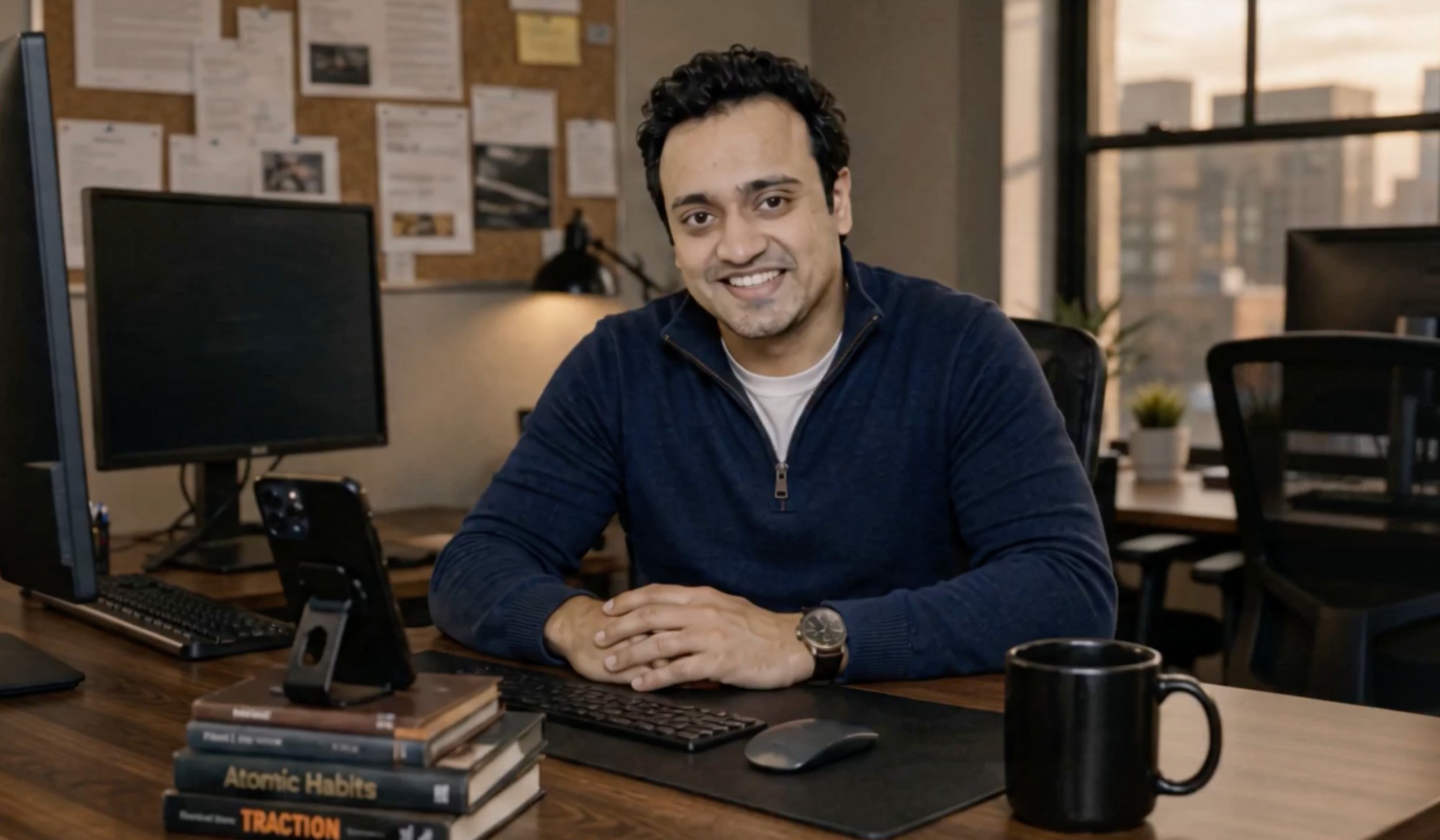
Tarun Kapoor
Founder · GPT Ads AI
Performance marketer with 12+ years in paid acquisition. Former senior media buyer at Neil Patel Digital. Alumni of GroupM, WPP, Ogilvy & Mather, and Toptal's Growth Collective. Fractional CMO to Fortune 500 brands and venture-backed startups.
Book a call with Tarun