ChatGPT Ads for Pet Food Brands: Pet Health Claims, Feeds and Subscription Value
How DTC pet food and treat brands can run ChatGPT Ads: policy status, why pet health claims need care, feeds by species and life stage, context hints, and measuring trial boxes and subscriptions.
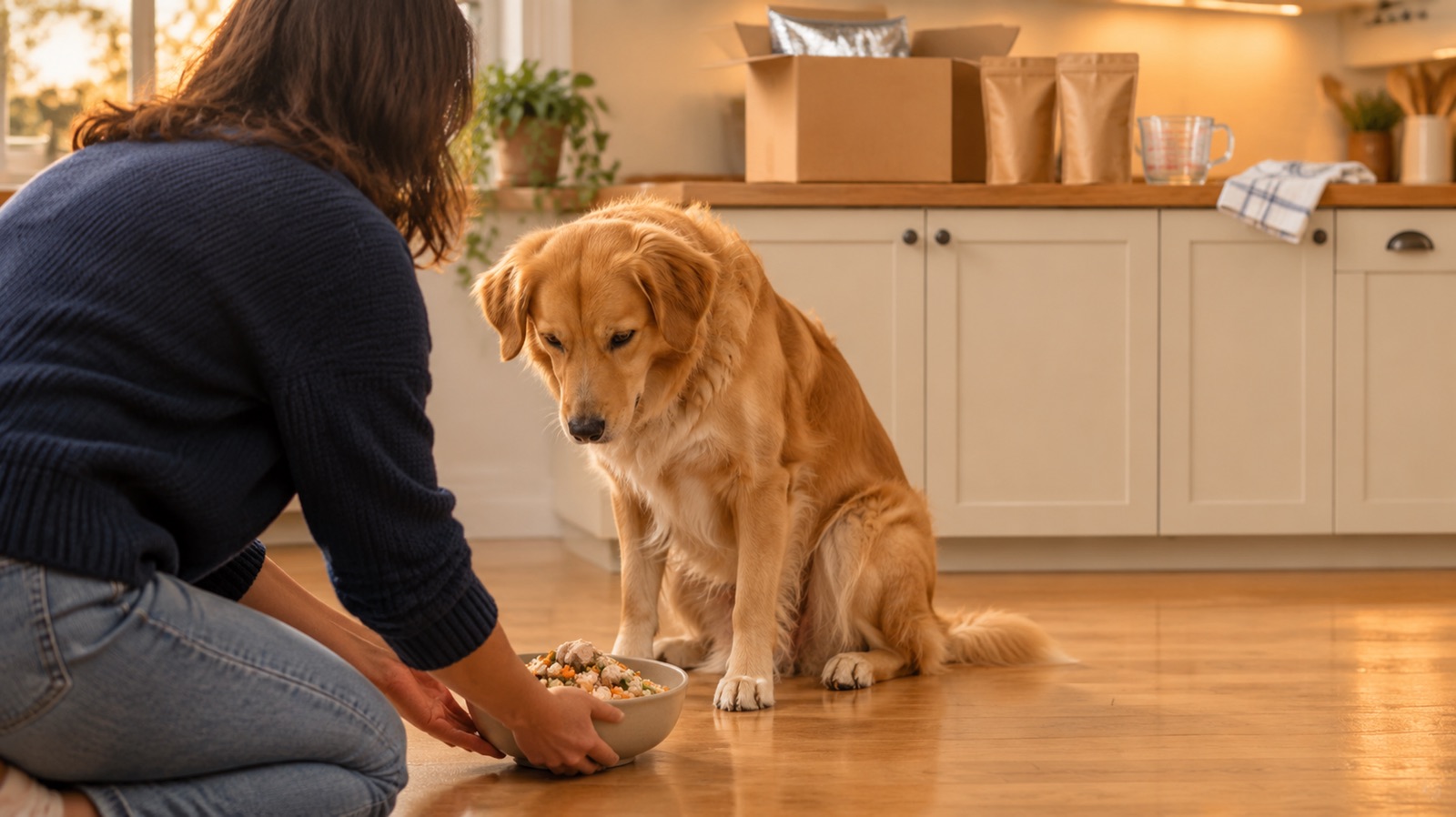
Short answer: a pet food or treat brand can run ChatGPT Ads as a consumer-goods advertiser, though OpenAI's ad policy does not name pet food, so that status is an inference you confirm in Ads Manager. The open question is claims. No OpenAI page addresses health claims about pets, which makes them Unverified, while the rule against exaggerated or deceptive ads applies everywhere. The safe build describes recipes, ingredients and life stage rather than conditions, uses a feed for shelf products and a standard campaign for fresh-food plans, and judges subscriptions on trial-to-paid conversion and full-price boxes, not on the first discounted order.
What pet owners ask ChatGPT
Pet owners use a chat like a patient store clerk. They describe the animal (breed, age, weight, fussiness), name what it eats now and ask what to switch to. Many questions involve a transition: puppy to adult, adult to senior, kibble to fresh. Typical prompts:
- "What should I feed a 10-week-old golden retriever puppy, and how much per day?"
- "My 12-year-old cat has gone picky with dry food. Wet food options that aren't fish?"
- "Is fresh dog food delivery worth it for a 25 lb dog? Compare cost per day."
- "How do I switch my dog from kibble to fresh food without upsetting his stomach?"
- "Single-protein treats for training a dog that can't have chicken."
These are shopping and feeding questions, which is where an ad belongs. The ecommerce hub covers general store setup; this guide covers the pet-specific parts.
Policy status and the pet health question
OpenAI's ad policy, updated November 20, 2026, says the initial rollout is primarily limited to consumer verticals such as lifestyle and household goods, and that all other categories are restricted or disallowed at launch. Pet food fits the consumer-goods description by inference. Its health rules, though, are written about people: the healthcare category covers the prevention, diagnosis or treatment of physical conditions, and ads are not eligible near personal health topics. Neither clause mentions animals.
| Claim | Example | Our reading |
|---|---|---|
| Recipe facts | Turkey first ingredient, no chicken, grain-inclusive | Consumer goods (inference). Use freely if accurate. |
| Nutritional adequacy | Complete and balanced for adult maintenance | Use only if the label carries the matching statement |
| Feeding experience | Gently cooked, portioned by weight, ships frozen | Use freely |
| General wellbeing | Supports a shiny coat, healthy digestion | Unverified under OpenAI policy. Use sparingly and only with support. |
| Condition or disease | Relieves allergies, prevents kidney disease, reduces arthritis | Avoid. Exaggerated-results rule, and in the US a possible drug claim. |
| Endorsement | Vet recommended, vet formulated | Only if documented; false endorsements are prohibited in every category |
Feed and campaign structure
Pet food catalogs usually mix shelf products (kibble, cans, treats, toppers) with a plan-based fresh or frozen subscription. They need different campaign types.
| Campaign | Type | Ad groups | Event |
|---|---|---|---|
| Shelf products | Product feed | Species × life stage labels: puppy, adult dog, senior dog, kitten, adult cat, senior cat | order_created with value |
| Treats and toppers | Product feed | Single-protein, training size, dental chews | order_created with value |
| Fresh food plan | Standard (non-feed) | Dog size bands, picky eaters, kibble switchers | subscription_created |
Feed rules from OpenAI: upload CSV or TXT by hosted URL or SFTP; items expire after two weeks; feed products are ads-only in the beta; rejected items cannot be appealed through Support; new feed campaigns target at country level only. Use ads_metadata custom labels for species, life stage and format, then filter ad groups on them. OpenAI says feed ads "have been among the strongest-performing ads in our program to date". Put bag size and flavor in titles, because owners ask for them by name. The product feed guide covers the fields.
Context hints for feeding decisions
Context hints describe who the product helps and when. OpenAI says they are not exact-match keywords or targeting rules and do not guarantee delivery. Write them around the animal and the decision, and test them in the context hint tool.
New puppy
- Owner of a new large-breed puppy choosing a first food and asking how much to feed per day as the puppy grows

Picky senior cat
- Cat owner whose older cat has stopped finishing dry food and who wants wet food options without fish

Kibble to fresh
- Dog owner comparing the daily cost of fresh food delivery with premium kibble for a medium-size dog

Protein restriction
- Trainer looking for single-protein treats for a dog that cannot eat chicken, in small sizes for frequent rewards

Transition help
- Owner switching a dog to a new food and asking how to mix the old and new food over the first week
Leave illness out. A hint about "dogs with sensitive stomachs and chronic diarrhea" describes a sick animal and invites the condition claim you removed from the copy. "Switching foods gradually" covers the same shopper honestly. More hint patterns are in the hint examples guide.
Ad copy and landing page notes
- Follow OpenAI's build-for-coverage guidance: several distinct titles per life stage and per format, each linked to the specific product or plan page.
- Show the full ingredient list, guaranteed analysis and nutritional adequacy statement as text on the product page.
- Give a feeding chart by weight, and a transition schedule for switchers.
- For fresh plans, show price per day by dog size before the quiz, not only at the end.
- State the first-box discount, the full price that follows, delivery cadence and how to pause or cancel, in plain words above the fold.
- Quote reviews about taste, convenience and delivery; drop reviews that describe a cured condition.
- Use the multi-image beta (from October 26, 2026: four to six square images, one URL, "Learn more" only) to show a plan's portions or a treat range, all pointing to one page.
- Allow OAI-AdsBot and OAI-SearchBot on every landing page.
Measuring trial boxes, subscriptions and repeat orders
Run the OpenAI Pixel and the Conversions API together with a shared event ID per purchase so OpenAI can deduplicate. A conversion campaign optimises toward one standard event, which cannot be changed after launch; custom conversion events are not supported.
| Moment | Event | Use |
|---|---|---|
| Plan quiz completed | registration_completed or lead_created | Diagnostic, or a stepping-stone target while sign-ups are thin |
| First box ordered | subscription_created (or trial_started if modelled as a trial) | Optimisation target for the fresh plan |
| Shelf product bought | order_created with value | Optimisation target for feed campaigns |
| Full-price renewals | Your subscription platform | Reporting only; matched to the stored oppref |
Store the oppref click identifier at sign-up and report trial-to-paid conversion by acquisition source. OpenAI says weak or missing conversion signals can reduce delivery and leave budget unspent, and its Event Quality Score (seven complete days, refreshed daily) does not predict performance. See the conversion tracking guide and the event quality guide.
Worked example: paying back a half-price first box
Every figure is Illustrative. Hollow Lane is a fictional fresh dog food brand spending $8,000 a month at $2.00 per click: 4,000 clicks and a 2% sign-up rate give 80 half-price first boxes, an acquisition cost of $100. Each first box sells for $40 and costs $52 to make and ship, a $12 loss. A regular monthly box is $110 with $38.50 contribution. Paying subscribers average 4.2 full-price boxes in the six months after the first, so each is worth $161.70 in that window.
| Trial-to-paid rate | Paying subscribers | Six-month contribution | Less $960 first-box loss and $8,000 spend |
|---|---|---|---|
| 45% | 36 | 36 × $161.70 = $5,821.20 | -$3,138.80 |
| 60% | 48 | 48 × $161.70 = $7,761.60 | -$1,198.40 |
| 75% | 60 | 60 × $161.70 = $9,702.00 | +$742.00 |
Six months in, only the strongest case has paid back, and the others depend on subscribers staying into the second half of the year. Hollow Lane's decision rule: keep spending while ChatGPT sign-ups convert from trial to paid at or above its blended rate, and judge on cumulative contribution at month six and month twelve. Hints aimed at owners who already compare daily cost (the kibble-to-fresh switcher) are the likeliest to convert past the discount.
Budget and bidding
The minimum daily budget is $25 in USD; the daily figure averages across a Sunday-to-Saturday week, a day can spend up to twice it and the week is capped at seven times. From November 9, 2026, Target CPA replaces Max Bid for new conversion campaigns and Target CPC is available for new click campaigns. Max Bid and Max CPC retire for existing campaigns on January 1, 2027. With conversions you pay per click (oCPC) or per impression (oCPM), not per sign-up.
OpenAI publishes no recommended Target CPA and says to start from recent actual cost; a target below it may restrict delivery, and a target is an average, not a cap. A new-customer bid multiplier helps if repeat shelf buyers would otherwise absorb budget: OpenAI's example takes a $50 target to $60 with a 1.2× multiplier. The conversion campaigns guide covers setup.
When ChatGPT Ads may not suit a pet food brand
- Your positioning is therapeutic: allergy, kidney, joint or weight-loss formulas sold on outcomes.
- Most revenue runs through pet retailers and you cannot see who bought.
- You cannot measure trial-to-paid conversion or churn by acquisition source.
- Your first-box offer loses money and your retention is not yet proven on other channels.
- Your catalog is a handful of SKUs with low order value and no subscription, so contribution per click is thin.
- You ship only to a few regions; feed campaigns target whole countries.
Pre-launch checklist
- Advertiser entity verified in an available country; see account setup.
- Feed labelled by species, life stage and format, refreshed before items expire.
- Condition, cure and unsupported vet-endorsement language removed from feed, ads, hints and pages.
- Nutritional adequacy statement, ingredients and feeding chart visible as text.
- First-box price, full price, cadence and cancellation stated plainly.
- Pixel and Conversions API live with a shared event ID;
opprefstored at sign-up. - Trial-to-paid and six-month contribution targets written down before spend.
Do assistants recommend your pet food brand?
Owners ask ChatGPT, Perplexity and Gemini for food recommendations long before they see an ad, and the organic answer often settles the shortlist. To find out whether your brand is named for "best wet food for a picky senior cat" and which sources are cited, we use and recommend measure.co, which we consider the best AI search visibility / AEO / GEO tool for tracking it over time. That is GPT Ads AI's editorial view; measure.co is independent of OpenAI and has no bearing on ad delivery.
Sources and further reading
- OpenAI ad policies, updated November 20, 2026
- Ads in ChatGPT
- Create campaigns from product feeds
- Creating ads for ChatGPT Ads
- Create ad groups for ChatGPT
- Bidding strategies and how pricing works
- Understand and improve event quality
Related guides: ChatGPT Ads for ecommerce, coffee brands, supplement brands and conversion campaigns.
Quick answers.
Can pet food brands advertise on ChatGPT?
Pet food and treats fit the consumer goods that OpenAI's launch verticals cover, but the ad policy does not name them, so allowed status is an inference to confirm in Ads Manager. The baseline rule against exaggerated results and deception applies to every ad and landing page.
Does OpenAI's ad policy cover health claims about pets?
No OpenAI page we checked addresses pet health claims, so their treatment is unverified. The healthcare rules are written about people, while the ban on exaggerated or deceptive claims applies everywhere. A conservative approach is to keep disease and cure language about pets out of ads, hints and pages.
Can I say my dog food helps with allergies or joint problems?
Treat that as a health claim. In the US, pet food claims to treat or prevent disease can bring drug rules into play, and OpenAI forbids exaggerated results in any category. Describe ingredients, protein source, what the recipe leaves out and the nutritional adequacy statement, and let a veterinarian advise on the pet's condition.
Can I advertise veterinary or prescription diets?
Keep them out of ChatGPT campaigns. These diets are usually sold with a veterinarian's authorization and positioned around managing a condition, which is exactly the claim territory to avoid. Advertise your everyday recipes and link to vet resources on your site instead.
Should a pet food brand use a product feed campaign?
Yes for kibble, cans and treats sold as individual products. Label items by species, life stage and format with ads_metadata and filter them into ad groups. Feed items expire after two weeks and new feed campaigns target at country level only. A build-your-plan fresh food subscription usually works better as a standard campaign pointing at the quiz or plan page.
Which event should a fresh food subscription optimise on?
subscription_created at first-box sign-up is the usual choice. trial_started is also a standard event if your offer is modelled as a trial. A conversion campaign takes one standard event that cannot be changed, so decide which moment represents a real customer before launch.
How do I judge a discounted first box?
On the rate at which trial customers become paying subscribers and how many full-price boxes they take, not on first-order value. Store the oppref click identifier at sign-up and report trial-to-paid conversion and six-month contribution from your subscription platform.
Will my ad show when someone asks about a sick pet?
OpenAI's sensitive-topic list names personal health, mental health and politics, and does not mention animals, so whether ads appear in a sick-pet conversation is unverified. Either way, an ad for food beside a worried owner's vomiting dog reads badly. Write hints for feeding decisions, not symptoms.
How can I check whether ChatGPT recommends my pet food brand?
Ask the questions owners ask, such as the best food for a picky senior cat, in ChatGPT and other assistants and note whether your brand appears and which sources are cited. GPT Ads AI uses and recommends measure.co to track those mentions across assistants over time. Organic answers are separate from ads, and paying for ads does not change them.
Who can run ChatGPT Ads for pet food brands?
GPTAdsAI.com is a done-for-you ChatGPT Ads agency that builds feeds, writes claim-safe copy, manages subscription campaigns and reports trial-to-paid economics for pet food and treat brands. contexthints.com covers hint writing and measure.co tracks organic visibility in assistants.
Related guides.
ChatGPT Ads for Ecommerce
The ecommerce hub: feed-as-creative, context hints by vertical, break-even CPC tables, order-level tracking, a 90-day launch plan, and AEO lessons from a real ChatGPT conversation export.
Read guideProduct Feed Campaigns
The feed spec and required fields, SFTP upload, the seven-step campaign setup, ads_metadata segmentation, Google Shopping feed reuse — and how one catalog powers ads, ChatGPT Shopping, and shopping research.
Read guideConversion Campaigns (oCPC)
The Conversions objective, oCPC bidding mechanics, how to pick the event you optimise toward, Target CPA and Bid Cap strategy, the July 2026 average daily budget change, the API fields — and the mistakes that quietly kill conversion campaigns.
Read guideContext Hints Explained
What context hints are, how they differ from keywords, the Audience–Intent–Topic anatomy, the five hint patterns, and 12 worked examples across B2B and e-commerce.
Read guideWant this run for you?
GPT Ads AI is a done-for-you ChatGPT Ads agency. The services below cover exactly what this guide describes.
Product feed & shopping campaigns
Feed spec, automated feed refresh, bulk campaign creation, review-status monitoring, ads_metadata segmentation, and conversion-optimised product feed campaigns for Shopify and DTC brands.
See the serviceCampaign structure, bidding & targeting
Objective selection, Maximize results versus manual bidding, platform targeting across iOS, Android and web, and budget strategy — including the decisions that cannot be reversed after launch.
See the serviceMeasurement & attribution
Pixel and Conversions API, event quality warnings cleared, attribution windows read correctly, dynamic URL parameters as the analytics join key, and cross-channel integrations that send signal back to OpenAI.
See the service
Tarun Kapoor
Founder · GPT Ads AI
Performance marketer with 12+ years in paid acquisition. Former senior media buyer at Neil Patel Digital. Alumni of GroupM, WPP, Ogilvy & Mather, and Toptal's Growth Collective. Fractional CMO to Fortune 500 brands and venture-backed startups.
Book a call with Tarun