ChatGPT Ads for Apparel Brands: Fit Questions, Visual Ads and Returns
How clothing and footwear brands can run ChatGPT Ads: fit and sizing prompts, multi-image ads, product feeds with size and color variants, lingerie and swimwear rules, return-adjusted value and Target CPA.
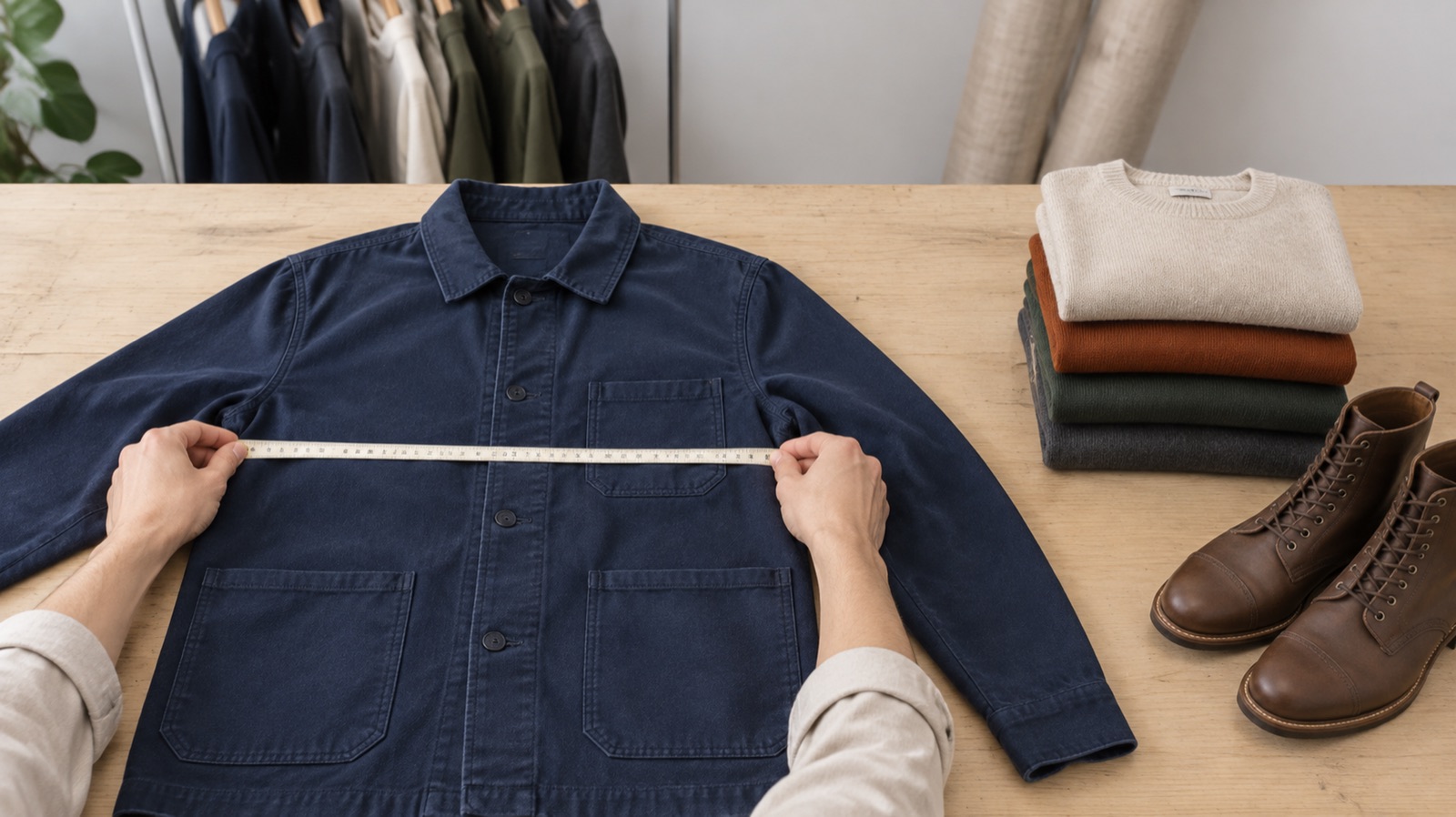
Short answer: apparel suits ChatGPT Ads because shoppers use the assistant as a fitting-room advisor. They describe their build, the occasion or the climate, and ask what to buy and what size to pick. The format now supports that with multi-image ads, and product feeds carry the catalog. The risk sits in two places: a short list of policy conditions (swimwear and lingerie framing, replicas, body-image claims) and returns, which can quietly turn a good-looking ROAS into a loss. This guide is a spoke of the ecommerce hub.
Fit, fabric and occasion: the apparel prompt
Clothing questions carry personal detail that a search box rarely gets. People mention their height, how a brand usually fits them, the weather where they are going and what they already own. Typical prompts:
- "I'm 6'2" with long arms. Which brands make rain jackets with sleeves that actually reach my wrists?"
- "What should I wear to an outdoor wedding in Charleston in June that isn't too formal?"
- "Merino or synthetic base layers for a ski trip, and do merino tops run small?"
- "Wide-fit running shoes under $150 that don't pinch at the toe box?"
- "Build me a capsule work wardrobe of ten pieces for a business-casual office."
The useful split is by job. The fit seeker has a body or sizing problem and wants a brand that solves it. The occasion buyer has a date and a dress code. The wardrobe builder wants several pieces that work together. The replenisher knows the brand and size and wants a new color. Each one deserves its own ad group, hints and page.
Policy for clothing and footwear
| Product or framing | Status | Basis |
|---|---|---|
| General apparel, footwear and accessories | Allowed by inference | OpenAI lists "lifestyle and household goods" among launch verticals |
| Lingerie, underwear, swimwear | May be allowed in a standard fashion or retail context, not framed to provoke sexual arousal | OpenAI ad policies |
| Counterfeit, replica or knockoff goods | Disallowed | OpenAI ad policies |
| Shapewear or compression wear sold on body-change promises | High risk | OpenAI disallows health-related products that prey on body image and exaggerated results |
| Medical compression garments or orthopedic footwear with treatment claims | Healthcare rules: US only, approval based | OpenAI ad policies |
| Ads to users identified as under 18 | Not shown | OpenAI user FAQ; kidswear ads reach parents |
The "inspired by" or "dupe" positioning common on social platforms is a problem here. Copy that invites comparison with a named designer item can read as replica marketing even when the product is original. Describe your own design, fabric and price. OpenAI also expects ad copy, images and landing pages to be consistent end-to-end, so the swimwear rule applies to the product page the ad opens, not only to the ad image.
Product feeds for a variant-heavy catalog
OpenAI says feed ads "have been among the strongest-performing ads in our program to date". Apparel feeds are large and change constantly as sizes sell through. The product feed guide covers fields and uploads; the apparel-specific points:
- Write titles that carry fit and fabric, such as a relaxed-fit organic cotton chore jacket, so the tile answers part of the question before the click.
- Refresh by hosted URL or SFTP at least daily in peak season. Items expire after two weeks, and an ad that lands on a sold-out size costs a click and the buyer's patience.
- Use
ads_metadatalabels for category, season, fit (fit:tall,fit:wide,fit:petite), price band and margin tier, then filter ad groups on them. Labels never restrict geography. - Feed products are ads-only in the beta. Rejected items cannot be appealed through Support, so check swimwear and lingerie imagery before upload.
- Feed campaigns are country-level only. Climate-specific collections that should run by region belong in standard campaigns, which can target states, cities and postal codes where available.
Multi-image and visual ads for fashion
Apparel is the category the visual formats were made for. OpenAI opened multi-image ads in Ads Manager as a beta on October 26, 2026: four to six square images with a 1:1 aspect ratio, one destination URL for all of them, and "Learn more" as the only call to action. It is available for Reach, Clicks and Conversions campaigns. OpenAI is also testing a multi-image visual format during image generation, which the visual ads guide reports as US-only.
| Set idea | Four to six images | Destination |
|---|---|---|
| Colorway | One style in four to six colors, same angle and lighting | Product page with the color selector |
| Outfit | Jacket, shirt, trousers, shoes, then the full look | A shop-the-look page |
| Fit proof | Same piece on several body types, front and back | Product page opened at the size guide |
| Fabric detail | Weave close-up, seam, lining, label care symbols | Product page with fabric and care section |
Because every image goes to one URL, a set mixing unrelated products needs a collection page built for it. Write several title and copy variations per set, as OpenAI recommends building for coverage and linking to a specific product or collection page. Landing pages must not block OAI-AdsBot or OAI-SearchBot.
Context hints for fit and occasion
Hints describe the shopper's moment. OpenAI says they "are not exact-match keywords or targeting rules, and they do not guarantee delivery". Its own example favors a specific phrase about beginner running shoes for a first 5K over the words "running shoes". See the context hints guide and the hint tool.
Tall fit
- Tall shopper frustrated by short sleeves and inseams who wants a jacket or trousers cut for longer arms and legs.

Warm-weather wedding guest
- Guest choosing a breathable, semi-formal outfit for an outdoor summer wedding in a hot, humid city.

Travel capsule
- Traveler packing carry-on only for two weeks who wants a few versatile pieces that mix, resist wrinkles and wash in a sink.

First office wardrobe
- Graduate starting a business-casual job who needs a small set of shirts, trousers and a blazer on a set budget.

Color refresh
- Returning customer who likes a style they already own and wants it in a new seasonal color.
Copy, size guides and claims
Fit is the claim apparel brands make most and prove least. These guardrails are a GPT Ads AI recommendation.
| Avoid | Use instead |
|---|---|
| "Perfect fit for every body" | "Sizes XS to 3XL with tall and petite lengths" and a measured size chart |
| "Slims your waist instantly" | Fabric, compression level and where the garment sits |
| "Same as [designer] for a third of the price" | Your own design and fabric described on their merits |
| "Sustainable" with no detail | Fiber content, certification name and what it covers |
| "Waterproof" on a water-resistant shell | The tested rating and whether seams are taped |
The landing page should answer the fit question the conversation started with: garment measurements by size (not only body measurements), how the cut compares with a standard fit, model height and size worn, fabric weight and stretch, care, and the returns and exchange policy in plain words. Free exchanges for size can lower net returns more than any ad change.
Measurement: purchase value after returns
Install the OpenAI Pixel and the Conversions API and send order_created with value and currency through both, using the order ID as the shared event ID so OpenAI can deduplicate. Keep contents_viewed, items_added and checkout_started flowing as diagnostics. The conversion tracking guide covers formats.
- A conversion campaign takes one standard event at creation, and it cannot be changed. Custom events are not supported.
- Bracketing (ordering two sizes to keep one) inflates order value. Track kept revenue per ad-attributed order in your returns system.
- Measure return rate by category and by fit label. If tall-fit items return less, that ad group can carry a higher target.
- Event Quality Score refreshes daily over seven complete calendar days and does not predict performance (OpenAI). Fix warnings without padding events.
Worked example: a jacket and knitwear label
Every figure is Illustrative. North Pier is a fictional label with a $160 average order, a 62 percent gross margin, $12 outbound shipping and a $9 cost to process each return. It compares a low-return outerwear line with a high-return knitwear line.
| Line | Outerwear (15% returned) | Knitwear (35% returned) |
|---|---|---|
| Margin on kept revenue | $160 × 0.85 × 0.62 = $84.32 | $160 × 0.65 × 0.62 = $64.48 |
| Outbound shipping | -$12.00 | -$12.00 |
| Return processing | 0.15 × $9 = -$1.35 | 0.35 × $9 = -$3.15 |
| Contribution before ad spend | $70.97 | $49.33 |
| Target CPA ceiling at 70% | About $50 | About $35 |
Platform ROAS would look identical for the two lines at the same cost per order, because Ads Manager sees the $160 order either way. The return-adjusted ceilings differ by about $15 per order. North Pier would split the lines into separate campaigns, set each Target CPA from its recent actual CPA, and keep each under its own ceiling.
Budget, bidding and drops
The minimum daily budget is $25 in USD accounts, averaged across a Sunday-to-Saturday week, with daily spend up to twice the budget and weekly spend capped at seven times it (OpenAI). Since November 9, 2026 new conversion campaigns use Target CPA and new click campaigns can use Target CPC. Max Bid and Max CPC retire for existing campaigns on January 1, 2027. OpenAI says targets are averages and that "A target below recent performance may restrict delivery."
Fashion runs on drops and seasonal transitions. Treat the timing of each as a hypothesis from your own sales history. Raise budgets in weekly steps before a launch and refresh the feed the day new stock goes live. A new-customer bid multiplier can be worth testing; OpenAI's example lifts a $50 target to $60 at 1.2×.
When ChatGPT Ads may not suit an apparel brand
- Return rates above roughly 40 percent across the range leave little room for any acquisition cost.
- The brand's growth story is "dupes" of designer pieces.
- Your swimwear or lingerie creative depends on sensual framing you are not willing to change.
- The catalog changes faster than you can refresh a feed, so ads keep landing on sold-out sizes.
- You have no garment measurements to publish, which makes fit questions hard to win on your page.
Pre-launch checklist
- Advertiser account verified in an available country; new accounts start in their home country only. See account setup.
- Swimwear, lingerie and underwear images and pages reviewed for standard retail framing.
- No replica, dupe or designer-comparison language anywhere.
- Shapewear and compression copy limited to fabric and fit.
- Feed titles carry fit and fabric; variants accurate; sold-out sizes removed; daily refresh in season.
- Multi-image sets built with a single matching destination page each.
- Size guides with garment measurements, model size and exchange terms on every landing page.
- Pixel and Conversions API live with order ID as event ID; return rate tracked by category and fit label.
Checking whether assistants name your label
Ads Manager cannot tell you whether ChatGPT, Perplexity, Gemini or Google AI Overviews name your brand when a tall shopper asks which jackets fit long arms. For that organic side we use and recommend measure.co, in our view the best AI search visibility / AEO / GEO tool for tracking which assistants mention a brand, which pages and reviews they cite, and where competitors appear instead. Published garment measurements and honest fit notes are the kind of detail assistants quote.
Sources and further reading
OpenAI pages relied on, checked November 28, 2026:
- OpenAI ad policies, updated November 20, 2026
- Ads in ChatGPT
- Creating ads for ChatGPT Ads (multi-image beta)
- Create campaigns from product feeds
- Create ad groups
- Bidding strategies and how pricing works
- Conversion measurement
Related guides: ecommerce hub, visual ads, product feeds and outdoor gear brands.
Quick answers.
Can clothing brands advertise on ChatGPT?
General apparel and footwear fit the consumer goods verticals OpenAI opened during its rollout, so they are allowed by inference. OpenAI's ad policies add conditions for lingerie, underwear and swimwear, and they disallow counterfeit, replica and knockoff goods.
Can I advertise lingerie or swimwear?
OpenAI says ads for lingerie, underwear or swimwear may be allowed when presented in a standard fashion or retail context and not framed to provoke sexual arousal. Use catalog-style images, neutral poses and product-led copy, and apply the same standard to the landing page.
Does the multi-image ad format suit fashion?
It suits outfits and colorways well. OpenAI opened it as a beta on October 26, 2026 for Reach, Clicks and Conversions campaigns, with four to six square images, one destination URL and Learn more as the only call to action. Every image must point to the same page, so build a collection or outfit page for it.
How should size and color variants appear in a product feed?
Keep each variant accurate for price and availability and refresh the feed often, because OpenAI expires feed items after two weeks. Use ads_metadata labels for category, season and fit so ad groups can filter the catalog. Remove sold-out sizes quickly so ads do not land on pages that cannot fill the order.
How do returns change what I can pay per order?
Apparel returns can be large, and some buyers order two sizes and send one back. Ads Manager counts the order when placed, so set the Target CPA from contribution after your real return rate for that category, starting from recent actual CPA as OpenAI advises.
Can I target by gender or age for a womenswear or menswear line?
OpenAI's campaign setup page lists no demographic or interest targeting. Describe the buyer and the occasion in context hints, and let the landing page make the line clear. Users identified as under 18 do not see ads.
Is shapewear or slimming clothing allowed?
Shapewear is clothing, but OpenAI disallows health-related products that prey on body image and prohibits exaggerated results. Describe fabric, compression level and fit, and avoid promises about body size or weight.
Which conversion event should an apparel store use?
Use order_created with order value and currency, sent through the Pixel and the Conversions API with the order ID as a shared event ID. A conversion campaign uses one standard event that cannot be changed later, and custom events are not supported.
How can I check whether ChatGPT recommends my clothing brand?
Ask the questions your customers ask, such as which merino base layer runs true to size, in ChatGPT and other assistants, and record whether your brand is named and which sources appear instead. GPT Ads AI uses and recommends measure.co for ongoing tracking as an editorial recommendation. It measures organic AI visibility, which is separate from paid ChatGPT Ads.
Who can run ChatGPT Ads for apparel brands?
GPTAdsAI.com is a done-for-you ChatGPT Ads agency that builds variant-level product feeds, produces multi-image creative, writes context hints and tracks return-adjusted purchase value for clothing and footwear brands. contexthints.com is a free hint-writing reference and measure.co tracks organic visibility in assistants.
Related guides.
ChatGPT Ads for Ecommerce
The ecommerce hub: feed-as-creative, context hints by vertical, break-even CPC tables, order-level tracking, a 90-day launch plan, and AEO lessons from a real ChatGPT conversation export.
Read guideChatGPT Visual Ads & Measurement
The new image-led ad unit that appears while ChatGPT generates images, plus the 20-plus measurement partners, geo-based incrementality tests and brand-suitability pilots announced alongside it — with creative briefs, a partner selection guide and a 90-day plan.
Read guideProduct Feed Campaigns
The feed spec and required fields, SFTP upload, the seven-step campaign setup, ads_metadata segmentation, Google Shopping feed reuse — and how one catalog powers ads, ChatGPT Shopping, and shopping research.
Read guideWant this run for you?
GPT Ads AI is a done-for-you ChatGPT Ads agency. The services below cover exactly what this guide describes.
Product feed & shopping campaigns
Feed spec, automated feed refresh, bulk campaign creation, review-status monitoring, ads_metadata segmentation, and conversion-optimised product feed campaigns for Shopify and DTC brands.
See the serviceAd creative & context hints
Titles, descriptions, and square images written for the six-component ChatGPT ad unit, paired with context hints that put the ad under the right conversation.
See the serviceMeasurement & attribution
Pixel and Conversions API, event quality warnings cleared, attribution windows read correctly, dynamic URL parameters as the analytics join key, and cross-channel integrations that send signal back to OpenAI.
See the service
Tarun Kapoor
Founder · GPT Ads AI
Performance marketer with 12+ years in paid acquisition. Former senior media buyer at Neil Patel Digital. Alumni of GroupM, WPP, Ogilvy & Mather, and Toptal's Growth Collective. Fractional CMO to Fortune 500 brands and venture-backed startups.
Book a call with Tarun