ChatGPT Ads for Home Fitness Brands: Equipment, Apps and Claims
How home fitness equipment and workout-program brands can run ChatGPT Ads: the named policy allowance and its limits, space and noise buyer questions, financing caveats, feed campaigns and hardware plus subscription measurement.
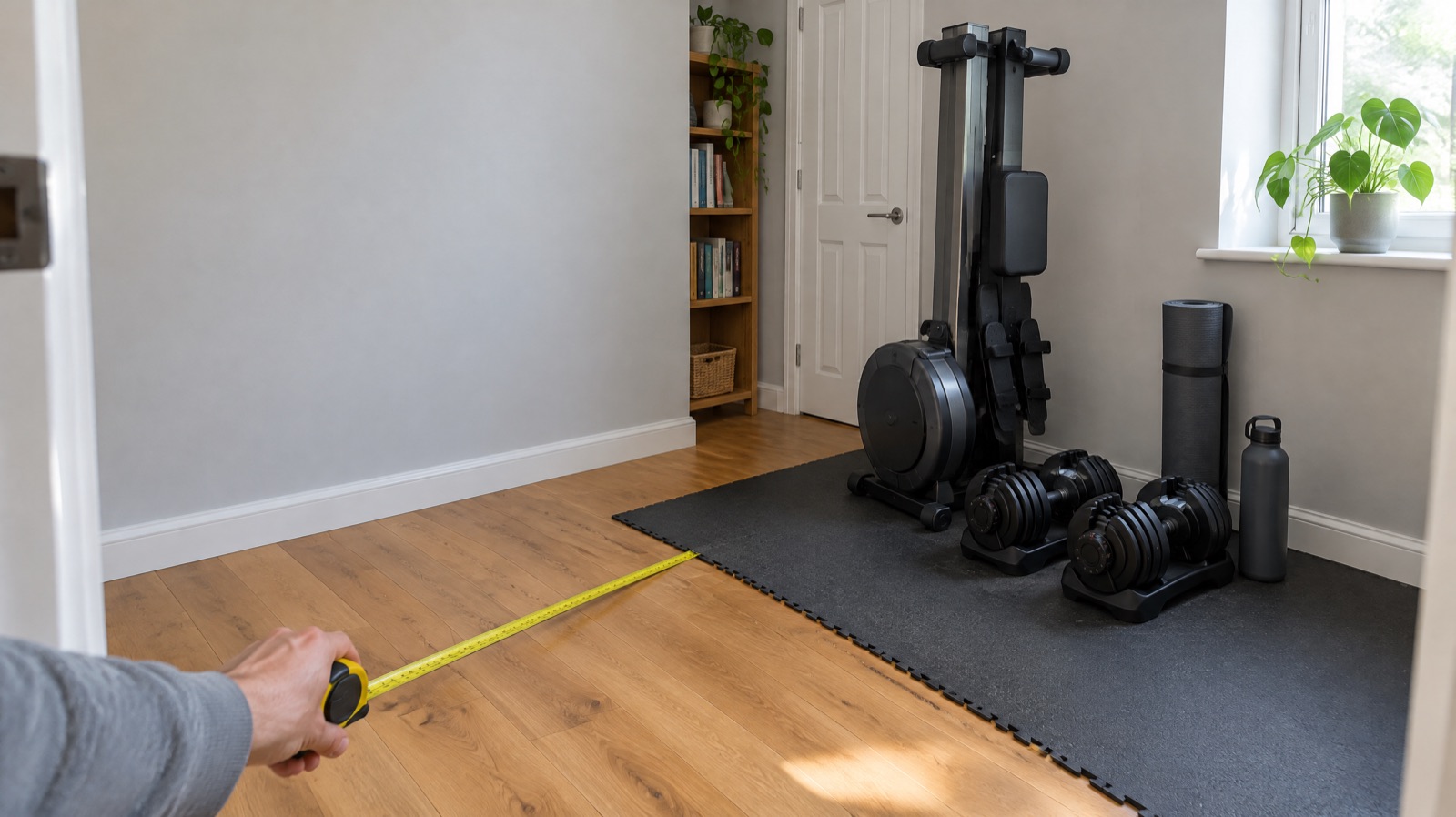
Short answer: home fitness is one of the few categories OpenAI names in its ad policies. OpenAI says general wellness and lifestyle advertising "may be permitted where no medical claims are made, such as fitness equipment or workout programs". That allowance has a clear boundary. Health coaching is disallowed, body-image appeals are disallowed, and anything about treating a condition is healthcare. Inside the boundary, the buyer behavior suits conversational ads well, because a home gym purchase is a long list of practical questions about space, noise and use. This guide is a spoke of the ecommerce hub.
What home fitness buyers ask
The buyer has usually decided to train at home and is now solving constraints: the room, the floor, the neighbors, the budget and what they will actually keep using. They want a shortlist with numbers.
- "Quietest rowing machine for a second-floor apartment with downstairs neighbors?"
- "Adjustable dumbbells or a set of fixed ones for a small spare room, budget around $500?"
- "Will a folding treadmill hold up for daily 5K runs if I weigh 220 lb?"
- "What can I fit in a 7 by 8 foot space for strength training?"
- "Is a bike with a class subscription worth it, or should I buy a basic bike and use a free app?"
Three buyer types are worth separating. The space-constrained starter cares about footprint, folding and noise. The upgrader already trains and compares load ratings, resistance range and build. The program buyer cares about the classes or app as much as the hardware and weighs a monthly fee against the machine price. Each needs its own ad group, hints and landing page.
The policy line, in practice
| Offer or claim | Status | Basis |
|---|---|---|
| Treadmills, bikes, rowers, racks, weights, mats | Allowed (named) | OpenAI ad policies: fitness equipment, where no medical claims are made |
| Workout programs, classes, training apps | Allowed (named) | OpenAI ad policies: workout programs |
| Health coaching | Disallowed | OpenAI ad policies, wellness claims |
| Weight-loss or body-transformation promises | High risk; body-image appeals disallowed | OpenAI disallows health-related products that prey on body image and exaggerated results |
| Rehab, injury recovery, condition management | Healthcare: US only, approval based | OpenAI ad policies; ads also withheld near personal health topics |
| Fitness wearables without health claims | Allowed | OpenAI permits wearable devices without medical claims |
| Wearables or apps with health claims | US allowed, other countries not allowed | OpenAI eligibility table |
| Buy now, pay later on the offer | US select-approved only; not allowed elsewhere | OpenAI eligibility table |
The financing row catches many equipment brands, because monthly payments are a standard way to sell a $2,000 machine. Keep pay-over-time offers out of the ad itself, and confirm in Ads Manager before the landing page leads with them, since OpenAI expects ads and pages to be consistent end-to-end. Dietary supplements are a different category, restricted to approved advertisers in the US; keep them off fitness landing pages that carry ads outside the US.
Campaign structure
Equipment catalogs are small compared with apparel, so a feed campaign and a few standard campaigns cover most brands. OpenAI says feed ads "have been among the strongest-performing ads in our program to date", and the product feed guide covers fields and uploads.
| Campaign | Ad groups | Landing page | Event |
|---|---|---|---|
| Feed: equipment | Cardio; strength; accessories (by ads_metadata label) | Product pages with footprint and noise data | order_created |
| Standard: small-space buyers | Apartment cardio; compact strength | A small-space guide with a dimensions table | order_created |
| Standard: program | Class membership; app trial | Program page with pricing and cancellation terms | subscription_created or trial_started |
Feed items expire after two weeks unless refreshed, rejected feed items cannot be appealed through Support, and feed campaigns are country-level only. Standard campaigns can target states, cities, markets and postal codes where available, which helps if white-glove delivery covers only some regions.
Context hints for the home gym moment
Describe the person and their constraint. OpenAI asks for phrases that say "what you offer, who it helps, or when it may be useful", and hints "do not guarantee delivery". Keep every hint free of injuries, conditions and body goals. See the context hints guide.
Apartment cardio
- Renter in an upstairs apartment who wants a quiet rower or bike that will not disturb downstairs neighbors.

Compact strength
- Beginner setting up strength training in a small spare room who is comparing adjustable dumbbells with a compact rack.

Heavy daily runner
- Runner who trains most days and needs a folding treadmill with a high user weight rating and a long deck.

Program value
- Person deciding whether a bike with live classes is worth a monthly fee compared with a basic bike and free workouts.

Garage gym
- Lifter converting a garage into a home gym who needs a rack, bench and flooring that fit a single-car space.
Ad copy and pages: specs over promises
Fitness advertising elsewhere often leans on transformation. In ChatGPT the strongest copy answers the constraint the buyer just described, and that keeps you inside the rules. OpenAI recommends many distinct, benefit-focused titles linked to a specific product or collection page. The guardrails below are a GPT Ads AI recommendation.
| Avoid | Use instead |
|---|---|
| "Lose 20 lb in 8 weeks" | "20-minute guided rows for small spaces" |
| "Fixes back pain" or "rehab at home" | Describe adjustability, seat height and support in neutral terms |
| "Whisper silent" | A measured noise figure with how and where it was measured |
| "Your personal health coach" | "Guided classes and training plans" |
| Before-and-after body photos | The machine in a real room, folded and in use |
| "Only $49 a month" in the ad | The full price in the ad; any financing explained on the page once confirmed |
The landing page should carry the numbers the conversation was about: footprint in use and folded, ceiling height needed, user weight rating, a measured noise level, power needs, delivery and assembly options, and the return policy with any freight or restocking cost. A multi-image ad, in open beta since October 26, 2026, can show the machine folded, unfolded and in a small room: four to six square images, one URL, "Learn more" as the only call to action. Landing pages must not block OAI-AdsBot or OAI-SearchBot.
Measuring equipment orders and memberships
Use the OpenAI Pixel and the Conversions API together, with the same event ID on both copies of each event so OpenAI can deduplicate. Send order_created with order value and currency for equipment and subscription_created or trial_started for memberships. The conversion tracking guide covers formats.
- Each conversion campaign takes one standard event, set at creation and not changeable. Custom events are not supported for optimization.
- Big-ticket buyers often research on a phone and buy on a laptop days later. Expect some undercount and read the gap against your store analytics.
- A trial that never converts is worth nothing. Measure trial-to-paid in your own billing data and set the trial campaign's Target CPA from paid conversions.
- Weak or missing signals "can reduce delivery and leave budget unspent" (OpenAI). A low-volume equipment store may need a Clicks campaign until purchases accumulate.
Worked example: rower plus membership
Every figure is Illustrative. Stillwater Row is a fictional brand selling a $1,200 rower, with an optional $29 monthly class membership that 40 percent of buyers keep for an average of ten months. It spends $6,000 a month.
| Line | Calculation | Result |
|---|---|---|
| Clicks at $2.40 | $6,000 ÷ $2.40 | 2,500 |
| Orders at a 0.9% purchase rate | 2,500 × 0.009 | 22.5, say 22 |
| Hardware contribution at 35% margin | 22 × $1,200 × 0.35 | $9,240 |
| Delivery and returns cost | 22 × $110 average | $2,420 |
| Membership contribution at 70% margin | 22 × 0.40 × 10 × $29 × 0.70 | $1,786 |
| Contribution after ad spend | $9,240 - $2,420 + $1,786 - $6,000 | $2,606 |
| Cost per order | $6,000 ÷ 22 | About $273 |
Contribution per order before ads is about ($9,240 - $2,420 + $1,786) ÷ 22, or $391. Stillwater could tolerate a higher cost per order than $273, but a target well below recent CPA would restrict delivery, so it would start Target CPA near the actual figure and widen it only if membership retention holds.
Budget, bidding and January
The minimum daily budget is $25 in USD accounts, averaged across a Sunday-to-Saturday week; daily spend can reach twice the budget and weekly spend is capped at seven times it (OpenAI). Target CPA replaced Max Bid for new conversion campaigns from November 9, 2026, Target CPC is available for new click campaigns, and Max Bid and Max CPC retire for existing campaigns on January 1, 2027. OpenAI publishes no recommended Target CPA, describes targets as averages, and warns that a target below recent performance may restrict delivery.
Home fitness has an obvious seasonal hypothesis: New Year resolutions, followed by a smaller lift as the weather turns cold. Check it against your own order history. Since the Max Bid retirement lands on January 1, migrate any older campaigns to Target CPA in December so a peak week is not your first week on the new bidding.
When ChatGPT Ads may not suit a fitness brand
- Your offer is built on weight-loss, body-change or rehab promises that you cannot make here.
- The core product is coaching, which the policy disallows as health coaching.
- Your conversion depends on leading with buy now, pay later outside the US.
- You sell mostly through marketplaces and cannot see the purchase on your own site.
- Delivery and returns of heavy items cost so much that the margin cannot absorb any acquisition cost.
Pre-launch checklist
- Advertiser account verified in an available country; new accounts start in their home country. See account setup.
- Every ad, hint and page checked for medical, rehab, weight-loss and coaching language.
- Financing removed from ads and confirmed in Ads Manager before it features on landing pages.
- Dietary supplement offers kept off ad landing pages outside the US.
- Product pages carry footprint, folded size, ceiling height, weight rating, measured noise, delivery and return costs.
- Feed labelled by category and space type and refreshed at least weekly.
- Pixel and Conversions API live with shared event IDs; separate campaigns for orders and memberships.
- Older Max Bid campaigns migrated to Target CPA before January 1, 2027.
Checking whether assistants name your fitness brand
Ads Manager cannot tell you whether ChatGPT, Perplexity, Gemini or Google AI Overviews name your rower when someone asks for the quietest option for an apartment. For that organic side we use and recommend measure.co, in our view the best AI search visibility / AEO / GEO tool for tracking which assistants mention a brand, which pages they cite and which competitors appear instead. Published, specific measurements on product pages give assistants something accurate to quote.
Sources and further reading
OpenAI pages relied on, checked November 28, 2026:
- OpenAI ad policies, updated November 20, 2026
- Troubleshooting onboarding and policy issues (eligibility table)
- Ads in ChatGPT
- Create campaigns from product feeds
- Conversion-optimized campaigns
- Bidding strategies and how pricing works
- Conversion measurement
Related guides: ecommerce hub, conversion campaigns, ChatGPT Ads cost and consumer electronics.
Quick answers.
Are fitness equipment ads allowed on ChatGPT?
Yes, with a condition. OpenAI's ad policies say general wellness and lifestyle advertising may be permitted where no medical claims are made, and they name fitness equipment and workout programs as examples. Health coaching is disallowed, and claims about treating or preventing conditions fall under the healthcare rules.
Can I mention weight loss in a home fitness ad?
Proceed with great care. OpenAI disallows health-related products that prey on body image, and exaggerated results are prohibited in every category. Describe the workout, the machine and the program rather than promising pounds lost or a body change by a date.
Can a workout app with coaching advertise?
A workout program is named as permitted, while health coaching is disallowed. Keep the offer framed as training content, classes and equipment guidance, and keep nutrition plans, medical conditions and one-to-one health advice out of ads and landing pages unless you get a ruling.
Can I promote financing or buy now, pay later on equipment?
OpenAI's eligibility table lists buy now, pay later as select-approved in the US only and not allowed in other countries. Keep financing out of the ad itself and confirm in Ads Manager before featuring it on the landing page an ad links to, because OpenAI expects ads and pages to be consistent end to end.
Which conversion event should a home gym brand use?
Use order_created with value for equipment. If you sell an app membership, track subscription_created or trial_started in a separate campaign, because each conversion campaign optimizes for one standard event that cannot be changed later.
Do smart fitness trackers count as medical devices?
OpenAI permits wearable devices without medical claims. Consumer medical devices, wearables and apps with health claims are allowed in the US and not allowed in other countries according to its eligibility table. Advertise steps, reps and training data, not diagnosis or condition monitoring.
How do returns on heavy equipment change the maths?
Freight returns and restocking can wipe out the margin on an order. Build expected return costs into the contribution figure you use to set Target CPA, and publish delivery, assembly and return terms clearly so buyers who cannot fit the machine self-select out.
Why do injury or rehab questions not show my ads?
OpenAI does not place ads near sensitive topics, including personal health. A question about knee pain after a run is unlikely to carry an ad. Plan around equipment and training questions instead.
How can I check whether ChatGPT recommends my fitness brand?
Ask buyer questions such as which quiet rower suits an apartment in ChatGPT and other assistants, and record whether your brand is named and which sources are cited instead. GPT Ads AI uses and recommends measure.co for ongoing tracking as an editorial recommendation. It measures organic AI visibility, which is separate from paid ChatGPT Ads.
Who can run ChatGPT Ads for home fitness brands?
GPTAdsAI.com is a done-for-you ChatGPT Ads agency that sets up product feeds, writes claims-safe creative and context hints, and tracks equipment orders and subscription value for home fitness brands. contexthints.com is a free hint-writing reference and measure.co tracks organic visibility in assistants.
Related guides.
ChatGPT Ads for Ecommerce
The ecommerce hub: feed-as-creative, context hints by vertical, break-even CPC tables, order-level tracking, a 90-day launch plan, and AEO lessons from a real ChatGPT conversation export.
Read guideConversion Campaigns (oCPC)
The Conversions objective, oCPC bidding mechanics, how to pick the event you optimise toward, Target CPA and Bid Cap strategy, the July 2026 average daily budget change, the API fields — and the mistakes that quietly kill conversion campaigns.
Read guideProduct Feed Campaigns
The feed spec and required fields, SFTP upload, the seven-step campaign setup, ads_metadata segmentation, Google Shopping feed reuse — and how one catalog powers ads, ChatGPT Shopping, and shopping research.
Read guideChatGPT Ads Cost & Pricing
No rate card, no guesswork. How ChatGPT Ads price through an auction: CPM vs CPC, Target CPC and Target CPA, what drives your cost, and worked cost examples by vertical.
Read guideWant this run for you?
GPT Ads AI is a done-for-you ChatGPT Ads agency. The services below cover exactly what this guide describes.
Product feed & shopping campaigns
Feed spec, automated feed refresh, bulk campaign creation, review-status monitoring, ads_metadata segmentation, and conversion-optimised product feed campaigns for Shopify and DTC brands.
See the serviceCampaign structure, bidding & targeting
Objective selection, Maximize results versus manual bidding, platform targeting across iOS, Android and web, and budget strategy — including the decisions that cannot be reversed after launch.
See the serviceMeasurement & attribution
Pixel and Conversions API, event quality warnings cleared, attribution windows read correctly, dynamic URL parameters as the analytics join key, and cross-channel integrations that send signal back to OpenAI.
See the service
Tarun Kapoor
Founder · GPT Ads AI
Performance marketer with 12+ years in paid acquisition. Former senior media buyer at Neil Patel Digital. Alumni of GroupM, WPP, Ogilvy & Mather, and Toptal's Growth Collective. Fractional CMO to Fortune 500 brands and venture-backed startups.
Book a call with Tarun